
No products in the cart.
Neodymium magnets, also known as NdFeB magnets, are the strongest type of permanent magnets commercially available today. Made from an alloy of neodymium, iron and boron, these magnets provide exceptional magnetic strength while maintaining a compact size.
Due to their high magnetic energy density, excellent performance and versatility, neodymium magnets are widely used in industrial equipment, automation systems, electric motors, renewable energy systems, electronic devices and customized magnetic assemblies.
Selecting the right neodymium magnet requires a comprehensive understanding of magnet type, magnetic grade, size, coating, magnetization direction and operating environment.
As a professional neodymium magnet supplier, we provide high-quality NdFeB magnets, pot magnets and customized magnetic solutions for global customers across various industries.
Neodymium magnets are rare earth permanent magnets manufactured using neodymium (Nd), iron (Fe) and boron (B). This material combination creates a powerful magnetic field compared with traditional ferrite magnets.
The main advantages of neodymium magnets include:
Compared with ferrite magnets, NdFeB magnets can achieve much higher magnetic performance in a smaller volume. This makes them ideal for applications where space, weight and efficiency are important factors.
Neodymium magnets are available in various shapes and designs depending on different application requirements.
Disc magnets are cylindrical magnets with a diameter larger than their thickness. They are one of the most common types of permanent magnets.
Typical applications include:
Disc magnets are commonly produced with axial magnetization, meaning the magnetic poles are located on the two flat surfaces of the magnet.
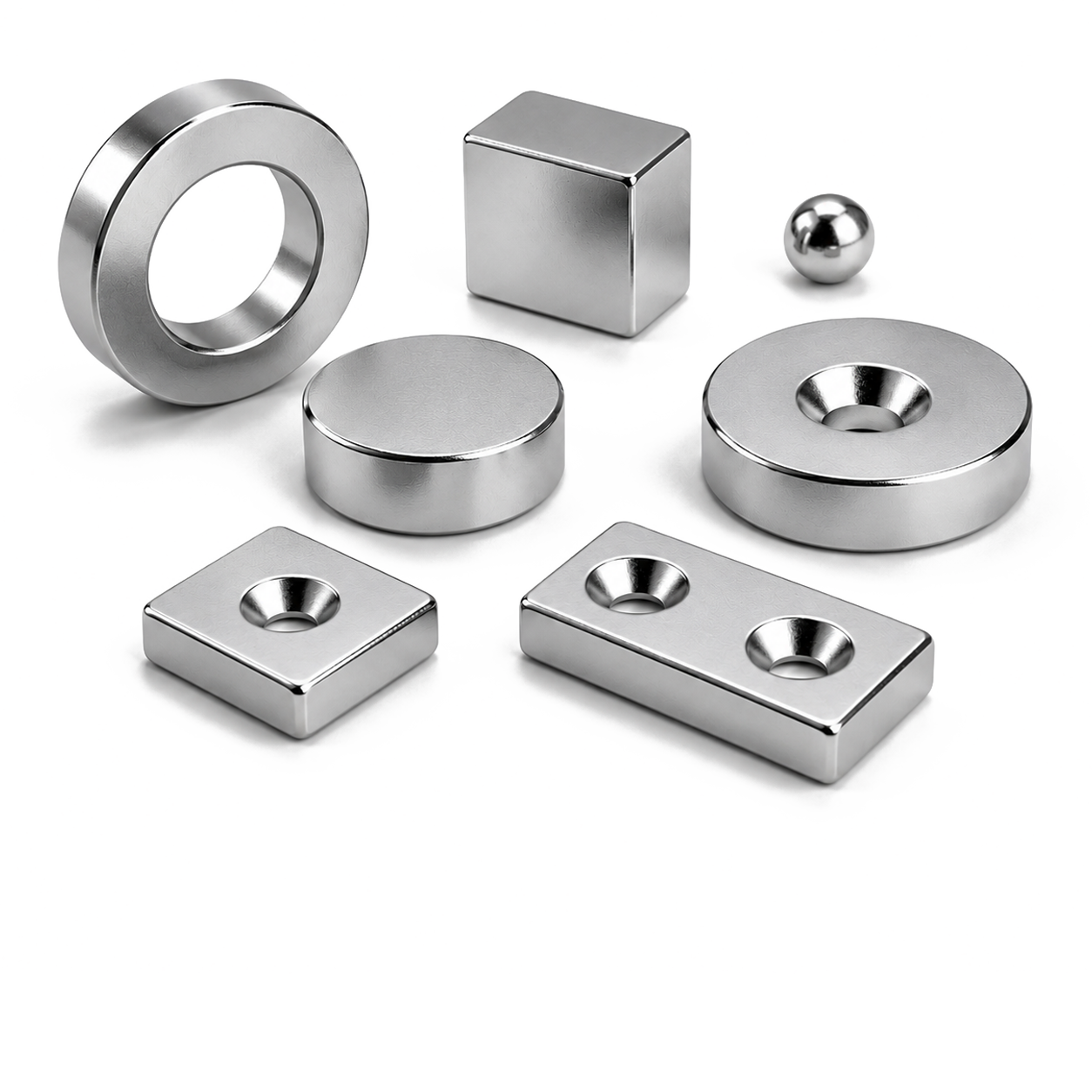
Block magnets, also called rectangular magnets, provide a larger surface area and flexible mounting options.
They are commonly used in:
Different magnetization directions can be customized according to application requirements.
Ring magnets feature a central hole that allows mechanical fixing or assembly.
Common applications include:
The hole design provides convenient installation while maintaining strong magnetic performance.
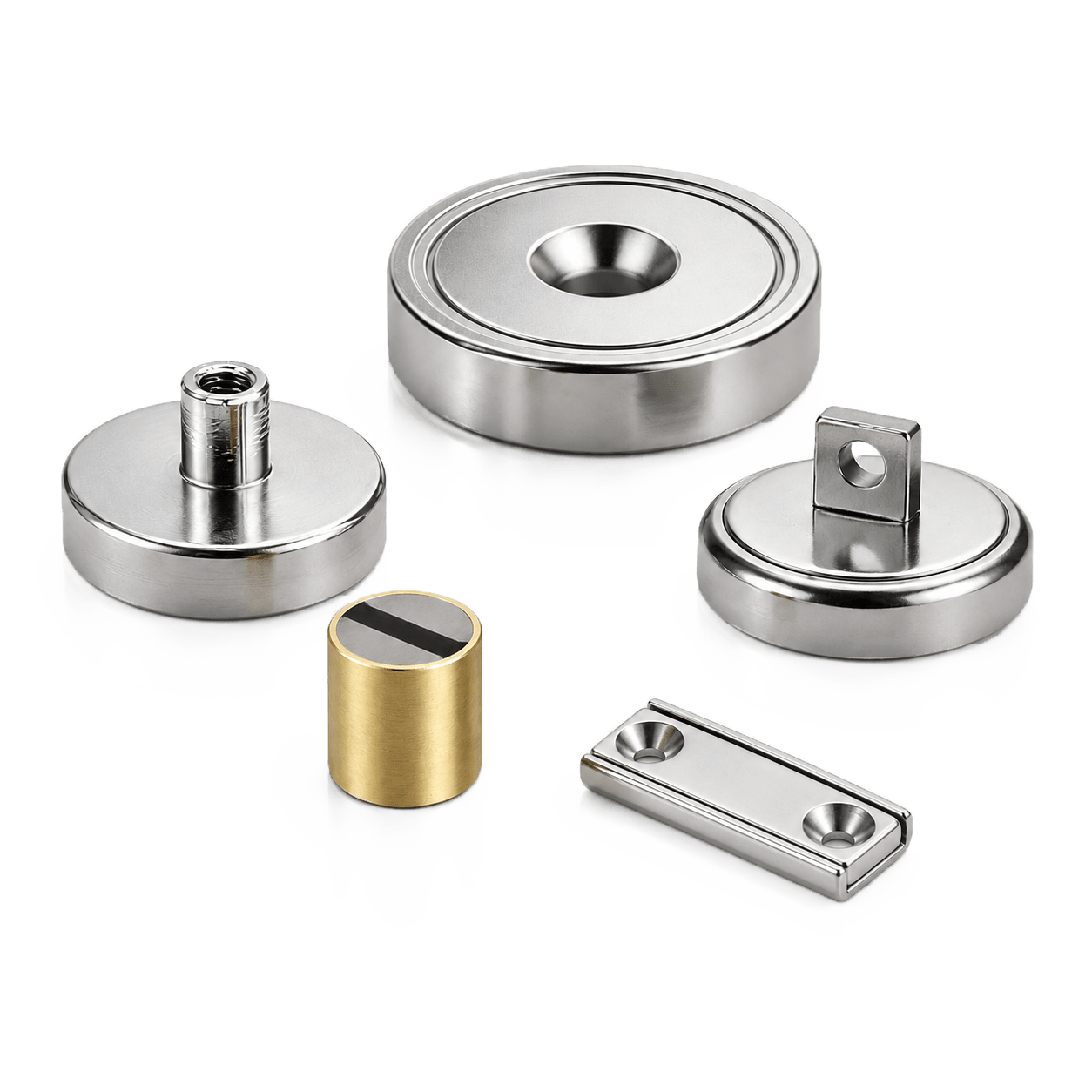
Pot magnets combine a powerful NdFeB magnet with a steel housing. The steel cup concentrates the magnetic field toward the working surface, significantly increasing holding force.
Advantages of pot magnets include:
Common applications include:
Different designs are available, including:
Choosing the correct magnet requires consideration of several key factors.
The magnetic grade determines the performance level of a neodymium magnet.
Common NdFeB grades include:
Higher grades generally provide stronger magnetic force, but the appropriate grade depends on the application requirements.
For example, compact devices may require higher magnetic grades, while cost-sensitive applications may use standard grades.
The size and geometry of a magnet directly influence magnetic performance.
Important dimensions include:
Customized dimensions allow engineers to optimize magnet performance according to specific designs.
Magnetization direction is an important factor when selecting permanent magnets.
Common magnetization methods include:
The magnetic poles are located on the top and bottom surfaces.
Common applications:
The magnetic field is oriented around the circumference of the magnet.
Common applications:
Choosing the correct magnetization direction ensures optimal magnetic performance.
Because neodymium magnets contain iron, they require surface protection to improve corrosion resistance.
Common coating options include:
The most widely used coating due to:
Suitable for general applications requiring basic protection.
Provides enhanced environmental protection for applications requiring additional durability.
The appropriate coating depends on operating conditions such as humidity, temperature and exposure environment.
Neodymium magnets are used in many industries due to their excellent magnetic properties.
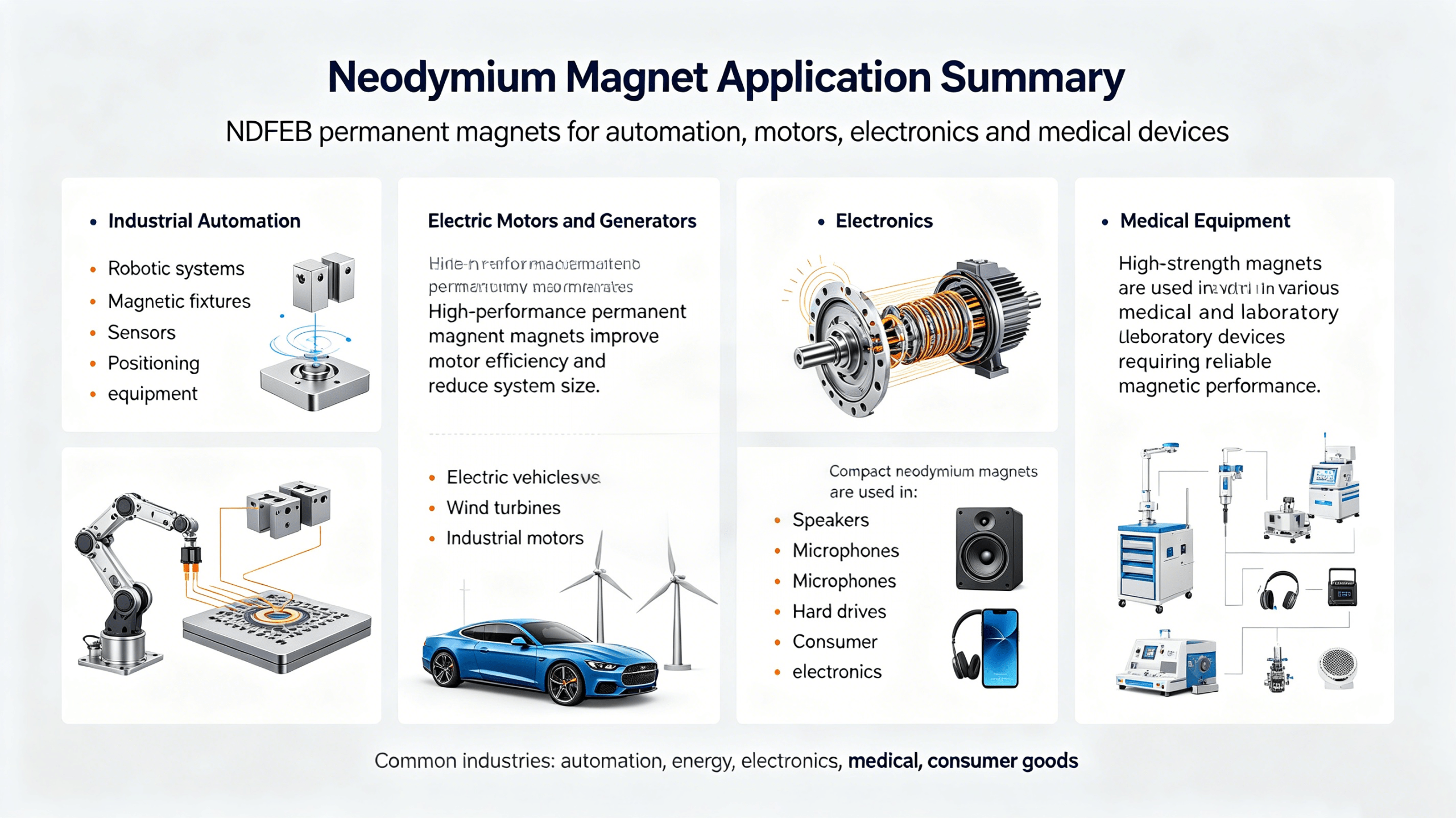
NdFeB magnets are widely used in:
High-performance permanent magnets improve motor efficiency and reduce system size.
Applications include:
Compact neodymium magnets are used in:
High-strength magnets are used in various medical and laboratory devices requiring reliable magnetic performance.
Different applications often require customized magnetic solutions rather than standard products.
A professional magnet manufacturer can provide customization services including:
From prototype development to mass production, customized solutions help customers achieve better performance and cost efficiency.
When choosing a magnet supplier, customers should consider:
A reliable supplier should have experience in:
Important quality factors include:
A professional supplier should be able to provide engineering support and customized solutions based on customer requirements.
Neodymium magnets provide outstanding magnetic performance for modern industrial and commercial applications. Their high strength, compact design and customization flexibility make them an essential component in many technologies.
Understanding magnet type, grade, size, coating and magnetization direction helps engineers select the most suitable magnetic solution.
As a professional neodymium magnet manufacturer and supplier, we provide NdFeB magnets, pot magnets and customized magnetic assemblies for customers worldwide.
If you are looking for reliable permanent magnet solutions, please contact us for customized support.