No products in the cart.
The main shapes of sintered neodymium magnet products include blocks, cylinders, rings, arc shapes, segments, and various irregular shapes. In actual production, large blanks are usually produced first, and then final products are obtained through post-processing according to customers' specific dimensional requirements.
Processing Methods for Magnets of Different Shapes | ||
Shapes | block | Three Cuts |
Two Cuts and One Grind | ||
One Cut and Two Grinds | ||
Three Grinds | ||
disc, cylinder and ring | Centerless Grinding (+Sleeve Hole) + Slicing | |
Centerless Grinding (+Sleeve Hole) + Surface Grinding | ||
Strip Cutting + Square-to-Round Grinding (+Sleeve Hole) + Slicing | ||
Wire Cutting + Centerless Grinding (+Sleeve Hole) + Slicing | ||
arc and segment shaped | Cutting + Profile Grinding | |
Wire Cutting + Profile Grinding | ||
Irregular Shape | Cutting + Profile Grinding | |
Wire Cutting + Slicing + Profile Grinding | ||
Slicing + Laser Cutting | ||
Sintered NdFeB magnets are produced by powder metallurgy. The material is hard, highly brittle, and prone to cracking. Moreover, heat generation, corrosion, and defects during processing can damage the magnetic properties. Therefore, appropriate processing methods must be selected based on these characteristics. Currently, the machining of sintered NdFeB mainly relies on traditional methods such as cutting, grinding, chamfering, and drilling, as well as other techniques like EDM (Electrical Discharge Machining), laser processing, and ultrasonic machining.
Processing Type | Process Name | Equipment Name |
Cutting | Slicing | Inner Circle Slicing Machine |
Multi-wire Cutting | Wire Saw | |
Wire Cutting | Wire Cutting Machine | |
Laser Cutting | Laser Cutting Machine | |
Grinding | Surface Grinding | Vertical Spindle Rotary Surface Grinder |
Horizontal Spindle Rectangular Surface Grinder | ||
Double Surface Grinding | Double Surface Grinding Machine | |
Profile Grinding | Profile Grinding Machine | |
Cylindrical Grinding | Square-to-Round Grinding Machine | |
Centerless Grinder | ||
Internal Grinder | ||
External Grinder | ||
Drilling | Sleeve Hole Drilling | Sleeve Hole Drilling Machine + Drilling |
Ultrasonic Drilling Machine | ||
Instrument Lathe Drilling | ||
Bench Drill |
1. Slicing (Cutting) Process
The cutting process is mostly carried out using slicing machines, EDM wire cutting machines, wire saws, or laser cutting machines.
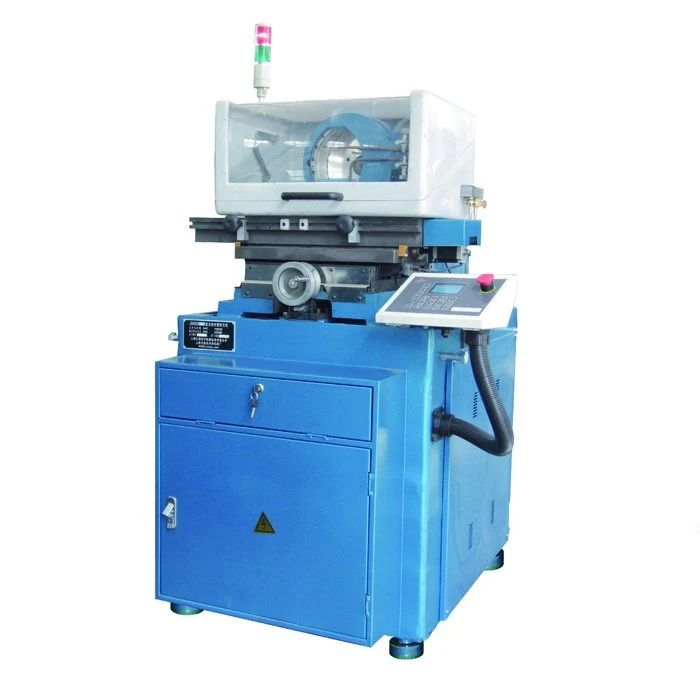
Slicing Machine: Using a high-speed rotating thin inner circular diamond blade, the NdFeB magnet is automatically cut. Cutting oil is used as a cooling and lubricating fluid during the slicing process. The advantage is that no special customized tools are required, offering high flexibility, and making it suitable for sample processing and sectioning. However, due to low processing efficiency, low material yield, and limited verticality accuracy, large-scale slicing production has gradually been replaced by multi-wire cutting machines (wire saws).
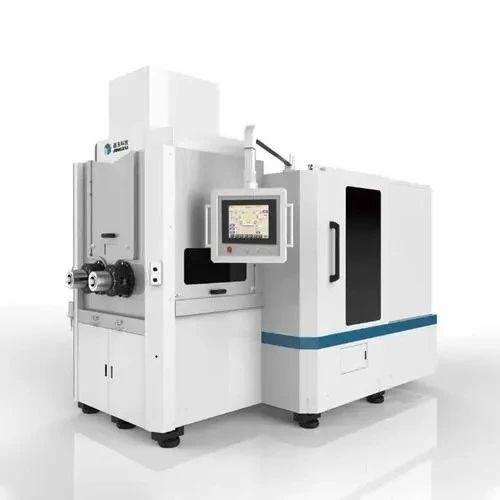
Multi-wire Saw Cutting: Workpieces are fixed on the worktable using fixtures, and cutting is performed by diamond wires wound on rollers. The high-speed rotating diamond wires (wire diameter 0.15–0.2 mm) cut through the magnets via friction, with cutting fluid used for cooling during the process. The main features are the ability to cut multiple workpieces simultaneously, high production efficiency, high yield rate, and high material utilization, with excellent verticality control, making it suitable for continuous mass production. However, customized rollers are required for products of different specifications.
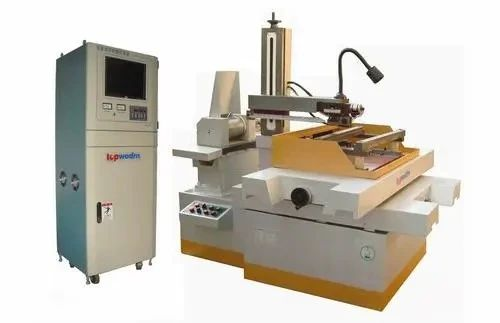
EDM Wire Cutting: Using a molybdenum wire electrode to generate high-frequency electrical discharges on the NdFeB magnet, causing localized melting. The cutting path of the electrode wire is controlled by a computer according to a preset trajectory. The advantages of EDM wire cutting are high processing accuracy, making it suitable for slicing arc-shaped and irregular-shaped products, as well as cutting large magnet blocks. The disadvantages are slower cutting speed and a heat-affected zone on the cut surface, which can significantly impact the magnetic properties.
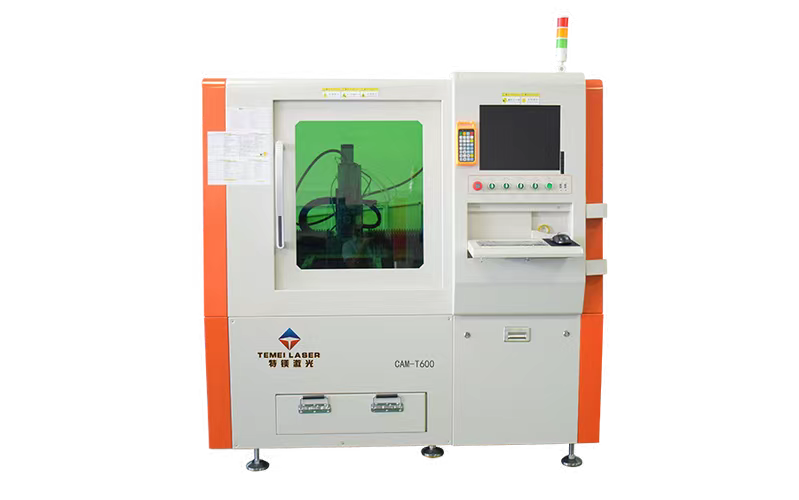
Laser Cutting: A laser beam is focused on the magnetic material, causing it to melt and vaporize, with the removed area forming a cutting seam. Laser cutting is a non-contact processing method, characterized by minimal environmental impact, high precision, and the ability to cut inclined surfaces, offering broad application prospects. However, temperature and stress variations during processing can affect the magnetic properties, and when cutting thicker materials, the divergence of the laser beam may result in a sloped cutting surface.
2. Grinding Process
Mainly refers to the processing method of grinding the surface of the workpiece using grinding discs or wheels. Common grinding methods for block-shaped NdFeB magnets include vertical grinding, surface grinding, and double-sided grinding. Cylindrical and ring-shaped NdFeB blanks are often processed using centerless grinding, block-to-round grinding, internal and external cylindrical grinding. Arc-shaped, fan-shaped, and irregular-shaped magnets can be processed using multi-station form grinding machines.
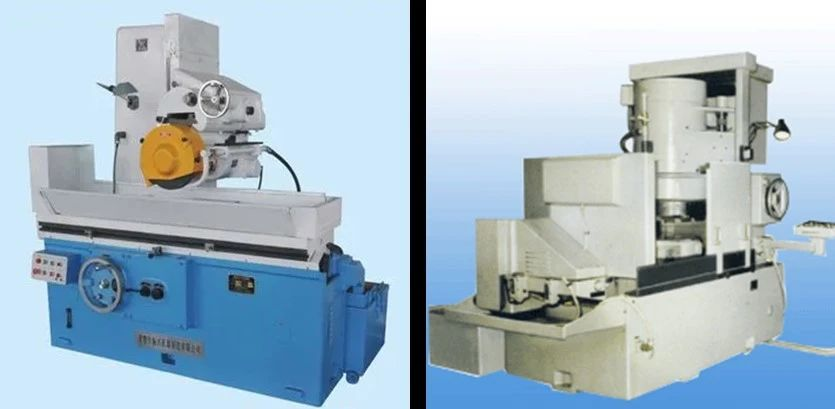
Surface Grinder: Used for flat surface grinding of magnetic materials and can also perform multi-surface processing. Typically, horizontal spindle rectangular table surface grinders (surface grinding) or vertical spindle rotary table surface grinders (vertical grinding) are used. The flat surface of the magnet is used as a reference, neatly stacked and fixed on the magnetic table with stoppers and fixtures, and reciprocating surface grinding is performed with a grinding wheel.
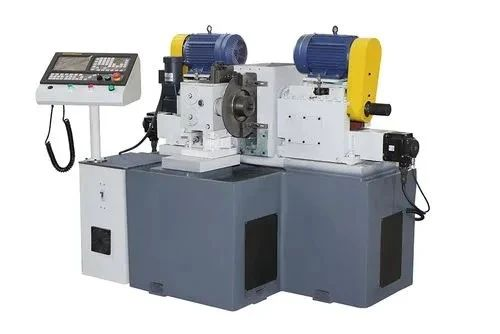
Double-sided Grinder: Products are continuously conveyed by a belt, with two grinding wheels positioned on both sides. The grinding wheels are driven by horizontally mounted dual spindles (with an inclination angle between the wheels), grinding both flat surfaces of the product simultaneously as they rotate. Double-sided grinders offer high machining precision and low surface roughness, making them the most widely used equipment for symmetrical flat surface processing in NdFeB machining.
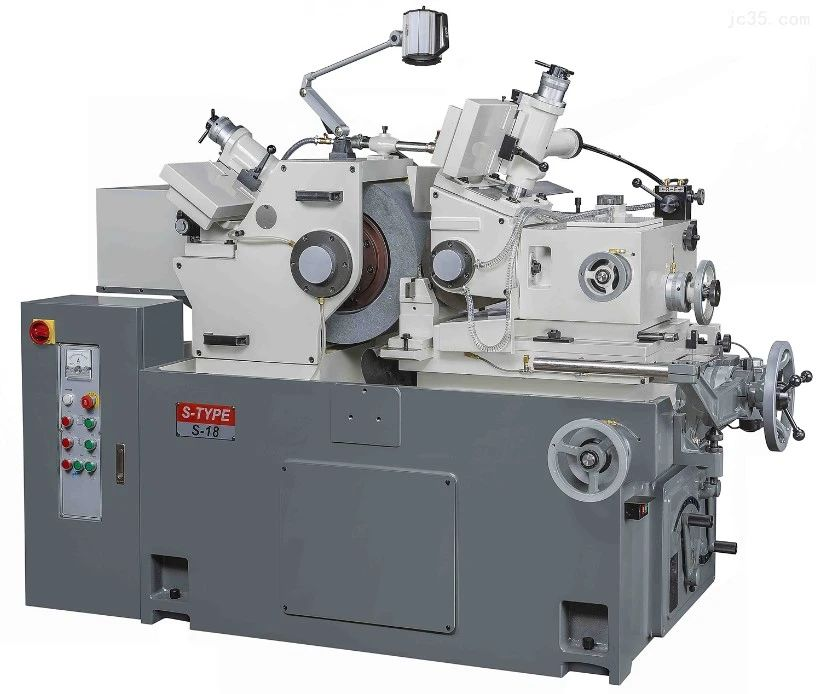
Centerless Grinder (or Block-to-Round Grinder): Centerless grinders are used for external cylindrical grinding of cylindrical blanks, while block-to-round grinders are used for rounding square bar magnets. Feeders and guide rails feed the magnets sequentially through a regulating wheel and a grinding wheel. The regulating wheel drives the magnet to rotate on a support rail, while the grinding wheel performs external grinding to achieve the required diameter.
Internal and External Cylindrical Grinders: The magnet workpiece is fixed by a fixture, and the grinding head moves along the inner or outer circumference of the workpiece to grind it to the specified inner and outer diameters. This process smooths the surface and removes burrs. It is mainly used for processing the inner and outer surfaces of ring-shaped products.
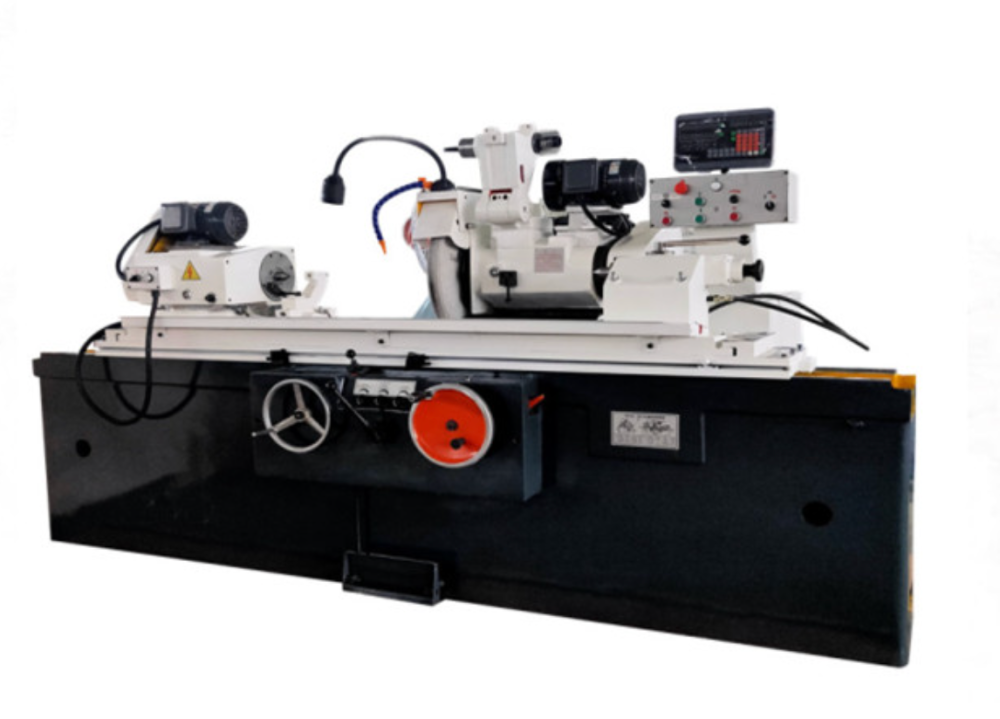
Form Grinder: Capable of grinding various flat and curved surfaces, or complex profiled surfaces using specially shaped grinding wheels (wheel dressing). It is suitable for grinding processes that do not require automatic feed, meeting the shape requirements of different types of products. Commonly used for mechanical chamfering or machining of irregular-shaped products.
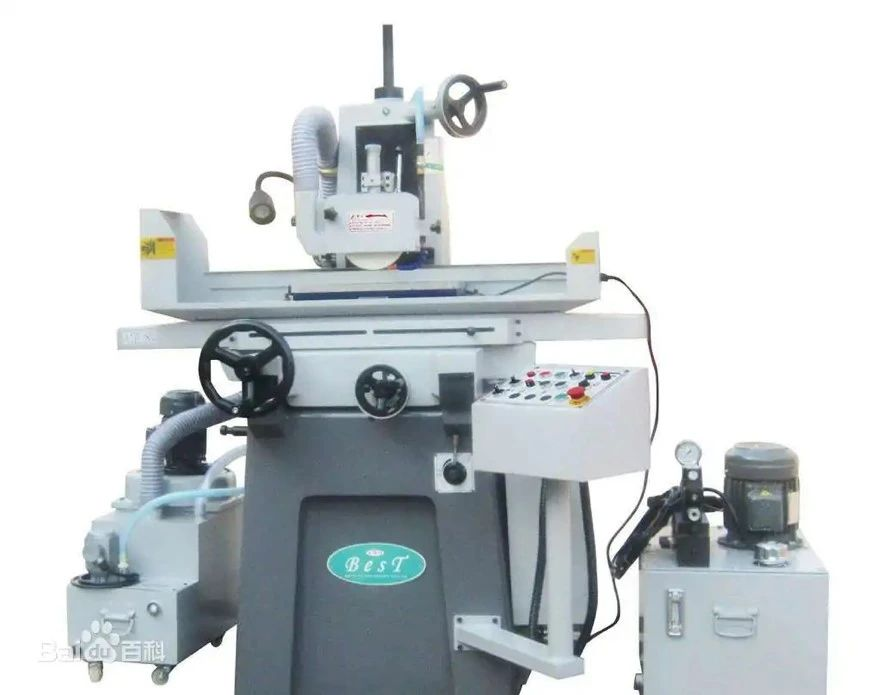
3. Drilling Process
Sintered NdFeB magnets are highly prone to cracking or breaking during drilling, so specialized equipment and processes are required for drilling operations. Common equipment for inner hole machining of NdFeB magnets includes core drilling machines, instrument lathes, and bench drills.
Core Drilling Machine (Sleeving Machine): This equipment uses diamond circular cutters, with the product clamped and rotated by a spindle, while the cutter feeds into the product to perform inner hole machining. Core drilling lathes are typically used for NdFeB products with inner holes larger than 8mm. Specially designed core drills and reamers can be used to complete both core drilling and reaming operations.
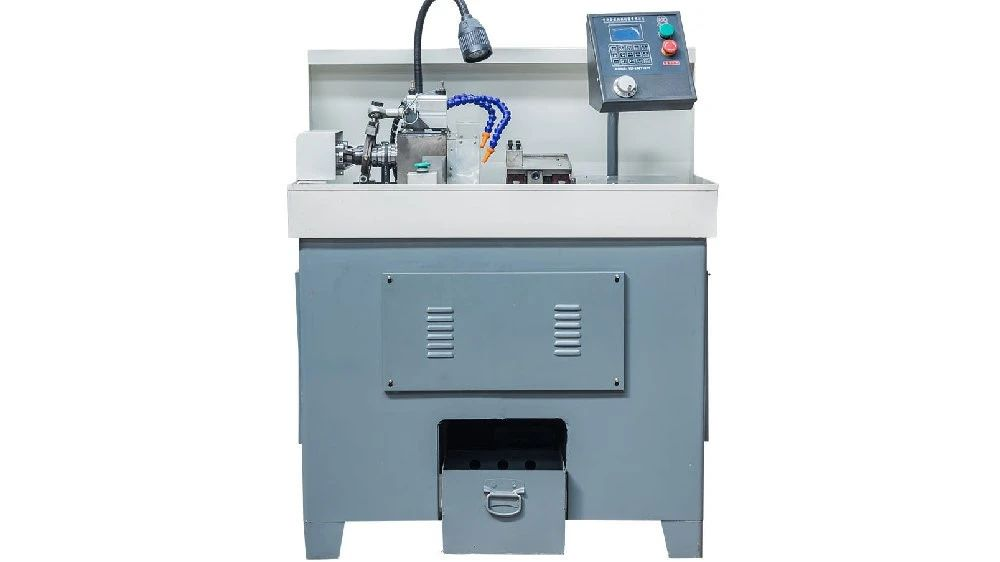
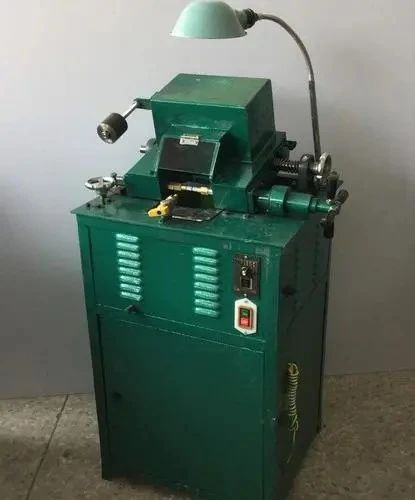
Instrument Lathe: The instrument lathe clamps the magnet product using a fixture, and the spindle motor drives the product to rotate continuously. A fixed carbide cutting tool performs drilling on the rotating workpiece. It is mainly used for drilling and sleeving holes in cylindrical, ring-shaped, and small block magnets, typically for hole diameters less than 5mm.
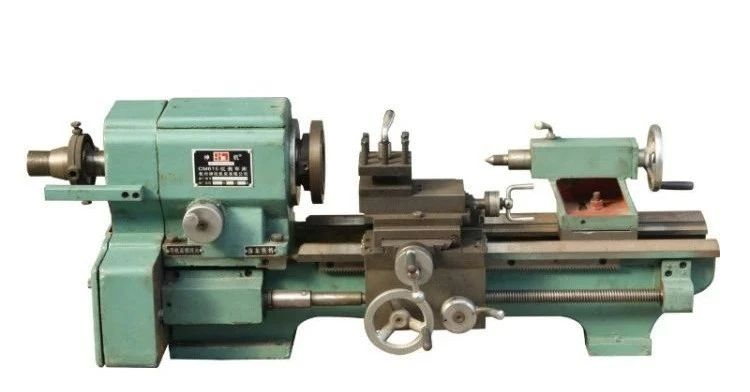
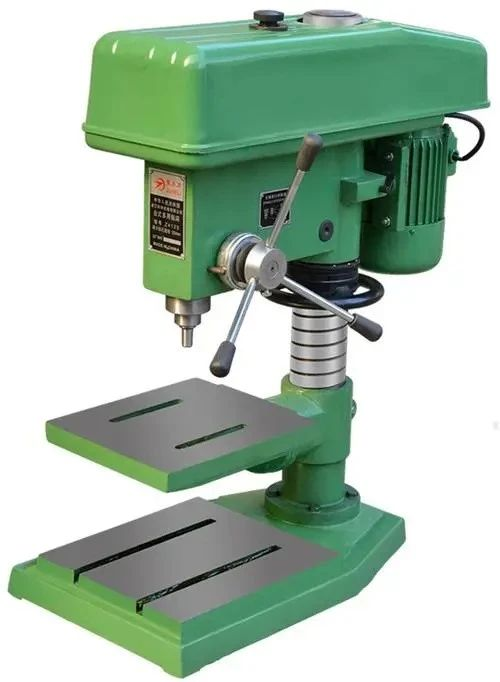
Bench Drilling Machine: This equipment uses customized fixtures to position the product, with a carbide cutting tool rotating and feeding to perform drilling. The main difference from an instrument lathe is that in a lathe, the workpiece rotates while the tool is fixed, whereas in a bench drill, the workpiece is fixed and the tool rotates. Therefore, bench drilling machines are suitable for processing through holes, blind holes, and stepped holes in irregularly shaped products.
Ultrasonic Drilling Machine: Ultrasonic energy is transmitted to the drill bit through a transducer, causing the drill bit to vibrate at high frequency and drive an abrasive slurry. Perforation is achieved through high-speed impact, friction, and cavitation effects. Ultrasonic drilling offers high precision, efficiency, and yield, making it suitable for small-hole machining in magnets.
4. Chamfering:
During grinding, slicing, drilling, and other machining processes, sharp edges on NdFeB magnets are prone to chipping and edge breakage. Additionally, tip effects during electroplating can lead to poor coating uniformity. Therefore, chamfering is usually performed after machining, including mechanical chamfering and vibratory chamfering. Common chamfering equipment includes vibratory chamfering machines and barrel chamfering machines.
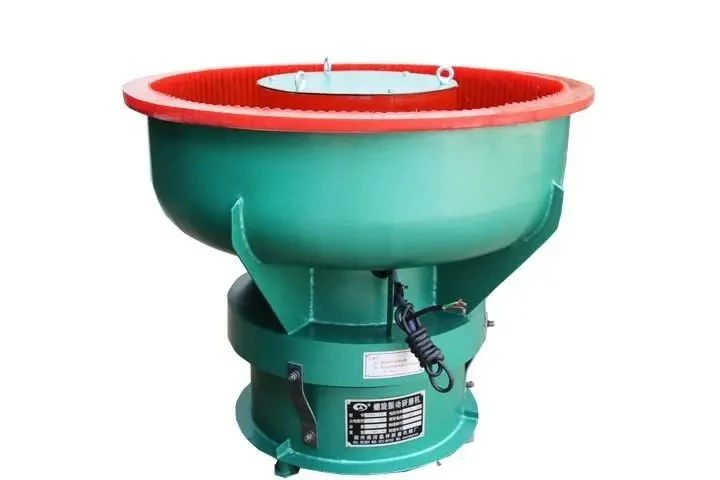
Vibratory Chamfering Machine: Driven by vibration deviation generated by a vibrating motor, the magnets and abrasive media inside the working chamber move up, down, left, right, or in a rotational motion, rubbing against each other to smooth the product surface and round sharp edges. Common abrasive media include silicon carbide and brown fused alumina.
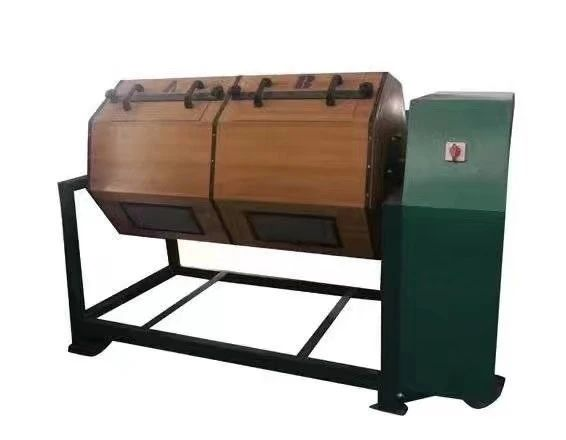
Barrel Chamfering Machine: NdFeB magnets, abrasive media, and polishing liquid are placed into a sealed horizontal barrel. As the barrel rotates, the products and abrasives move in a centrifugal motion and rub against each other, achieving the chamfering effect.