Most buyers and engineers rely on a simple rule for neodymium magnets: higher number = stronger magnet.
This is partially true — but choosing N52 blindly often leads to unnecessary cost, heat failure, or overstrength issues in assemblies.
Magnet grade is only one piece of the puzzle. Real-world performance depends on size, temperature, air gap, steel circuit, coating, and installation.
In this post, we break downN35, N38, N42, N45, N52 neodymium magnet grades, clarify key technical terms, compare use cases, and share a repeatable selection workflow for your projects.
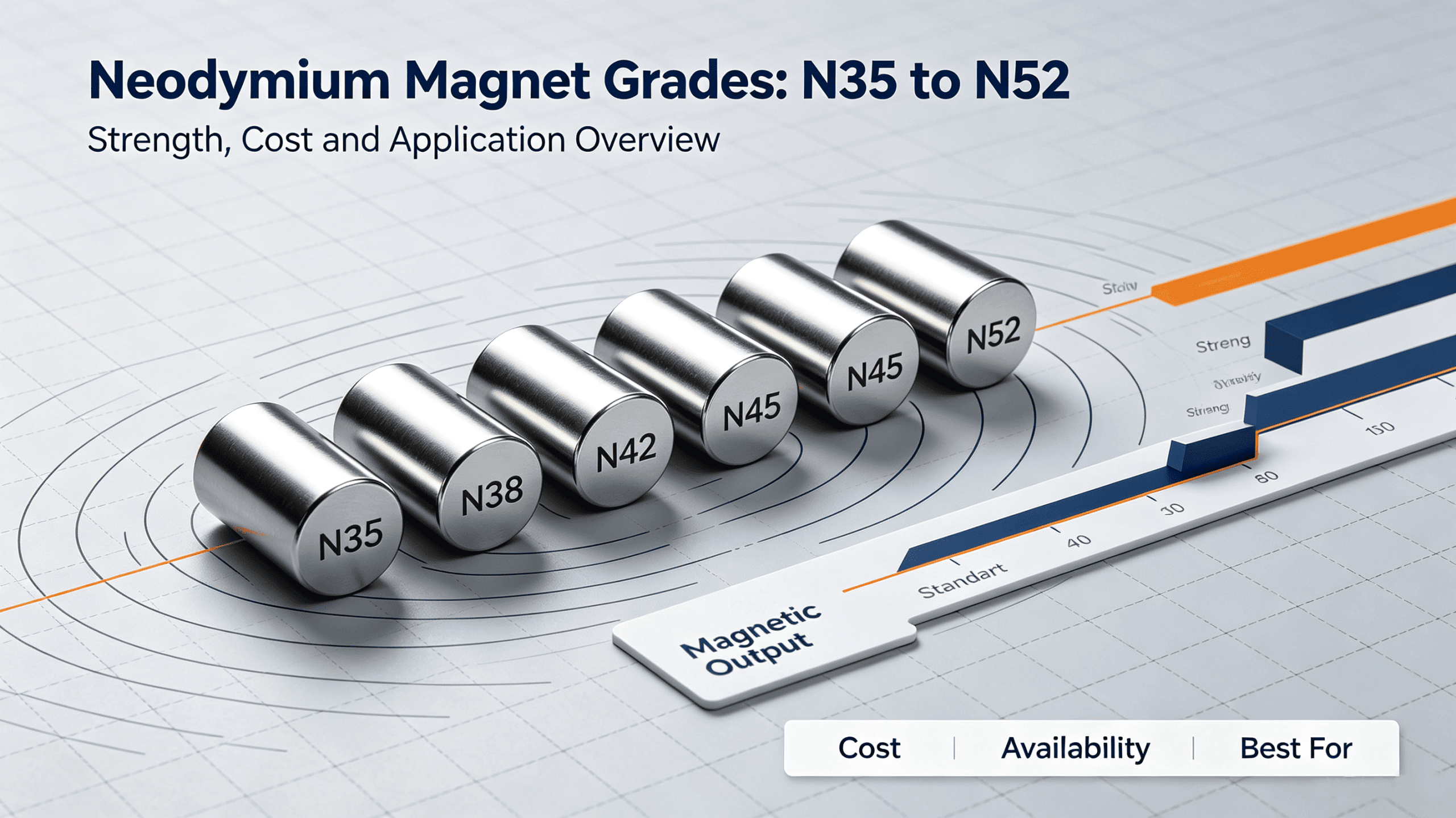
Quick Grade Cheat Sheet (Start Here)
The number on neodymium magnets stands for maximum energy product (BHmax, MGOe) — the core indicator of magnetic energy density.
Key Truth: Higher grade = stronger magnetic output only if all other conditions (size, temp, air gap) are identical. A large N35 magnet can easily outpull a tiny N52 magnet.
What Do Magnet Grade Numbers Actually Mean?
N-series grades (N35–N52) describe the magnetic material property, not direct finished performance. The numbers do NOT represent pull force, surface Gauss, temperature resistance, size, or neodymium content percentage.
The only accurate definition: the approximate maximum energy product (MGOe) of the raw magnetic material.
Many people mistakenly believe N52 is 52/35 stronger than N35 — this is incorrect. Pull force follows the full magnetic circuit, not a linear grade ratio.
3 Core Magnetic Properties You Must Know
To select magnets correctly, master these three datasheet indicators:
Residual magnetic flux after full magnetization. Higher Br means stronger magnetic flux density under the same conditions. Higher-grade magnets usually have higher Br values.
The core indicator of demagnetization resistance, especially critical for high-temperature environments and reverse magnetic fields. A magnet with lower N-rating but high Hcj can outperform standard N52 in hot working conditions.
Directly corresponds to the grade number. Higher BHmax enables: stronger output in the same volume, smaller magnet size for the same demand, and higher flux in space-constrained designs.
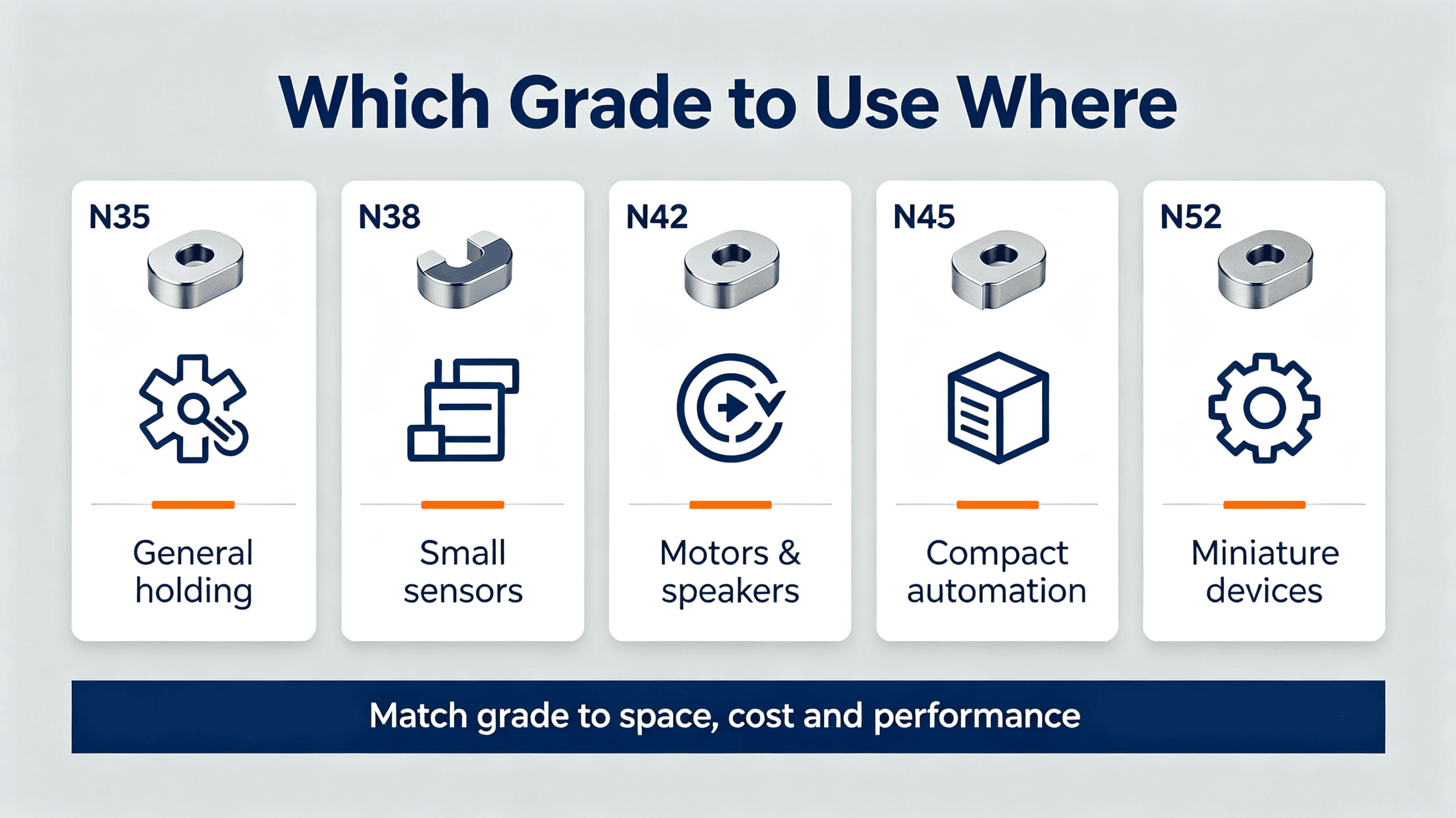
Compare N35, N38, N42, N45 and N52 neodymium magnet grades by magnetic output, relative cost, selection advantages and typical applications.
| Grade | Magnetic Output | Relative Cost | Core Selection Advantage | Typical Applications |
|---|---|---|---|---|
| N35 | Standard | Lowest | Economical, widely available and sufficient for general-purpose applications. | Fixtures, displays, cabinet hardware, DIY projects, basic sensors and packaging. |
| N38 | Moderate | Low–Medium | A moderate performance upgrade from N35 with only a limited increase in cost. | Small sensors, consumer electronics, magnetic switches and light-duty industrial holding systems. |
| N42 Best overall balance | Strong | Medium | The best overall balance of magnetic strength, cost, availability and design flexibility. | Motors, speakers, automation equipment, encoders, magnetic couplings and industrial sensors. |
| N45 | Very Strong | Medium–High | Higher magnetic output for compact and weight-sensitive designs where increasing magnet size is difficult. | Compact motors, robotics, precision instruments and high-performance automation systems. |
| N52 Maximum output | Extremely Strong | Highest | Maximum commonly available standard-grade magnetic performance from a minimal material volume. | Miniature devices, ultra-compact assemblies, high-output sensors and precision magnetic components. |
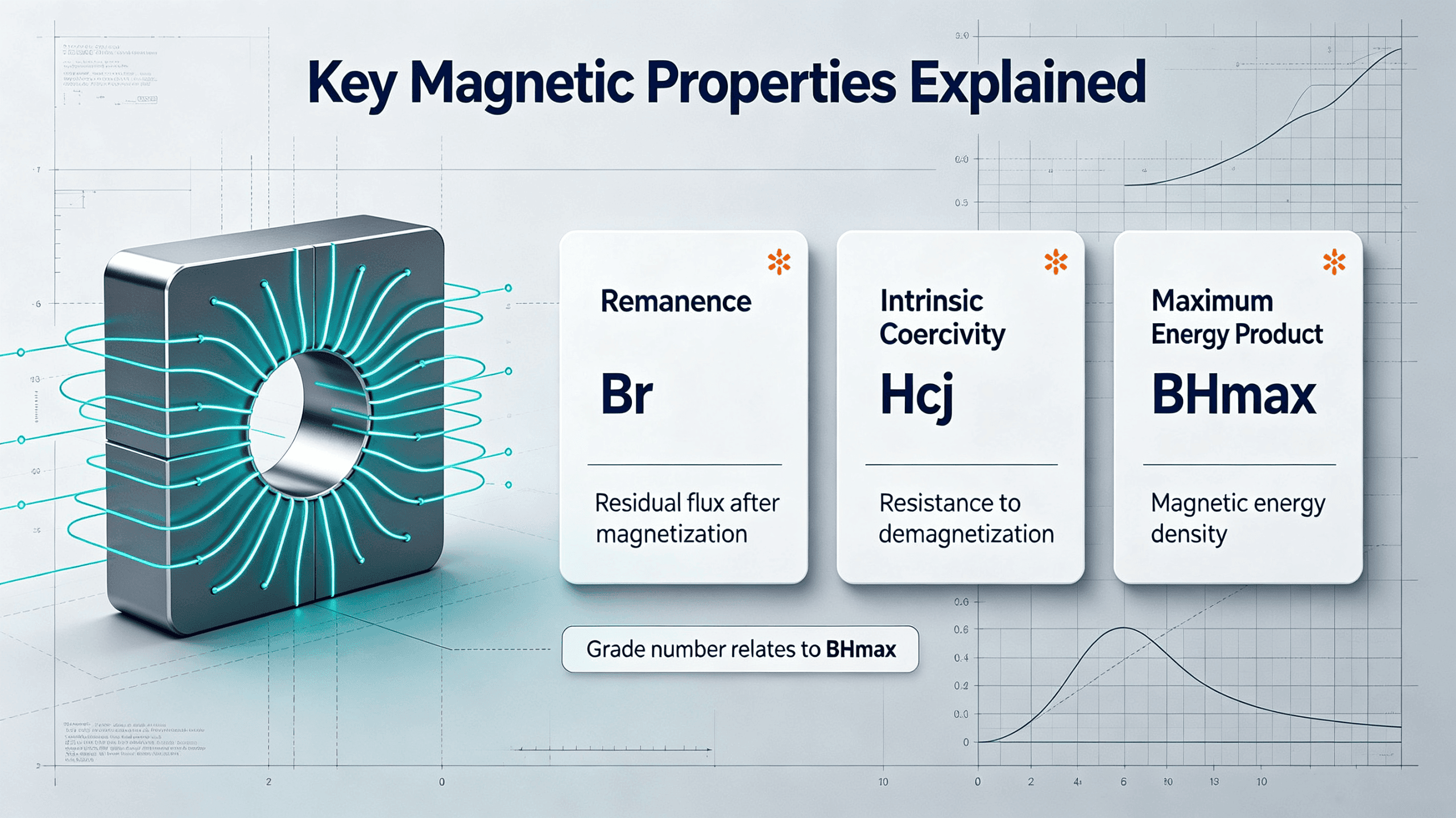
Grade Deep Dive: When to Choose Each One
N35 | Best for Cost-Sensitive General Use
The most universal neodymium magnet grade. It delivers reliable basic magnetic performance at the lowest cost, with full-size availability. Perfect for projects with ample installation space and no high-performance requirements.
N38 | Best for Minor Performance Upgrades
A transitional grade between N35 and N42. It fixes the slight performance shortage of N35 without the cost jump of higher grades, ideal for design optimization of small consumer products.
N42 | Best All-Around Industrial Grade
The top choice for most industrial engineers. N42 avoids the high cost of N45/N52 while providing stable, strong magnetic output. It supports high-temperature suffix customization and has excellent supply stability.
N45 | Best for Compact High-Performance Designs
Fills the performance gap between N42 and N52. It boosts flux density for space-limited assemblies without the premium cost of N52, suitable for robotics and portable precision equipment.
N52 | Best for Ultra-Compact Maximum Output
The strongest mainstream standard grade. It is exclusively for scenarios where space is extremely limited and every bit of magnetic output matters. Not recommended for conventional holding applications (overkill & high cost).
Critical Misconception: Higher Grade ≠ Better Heat Resistance
This is the most common design mistake.
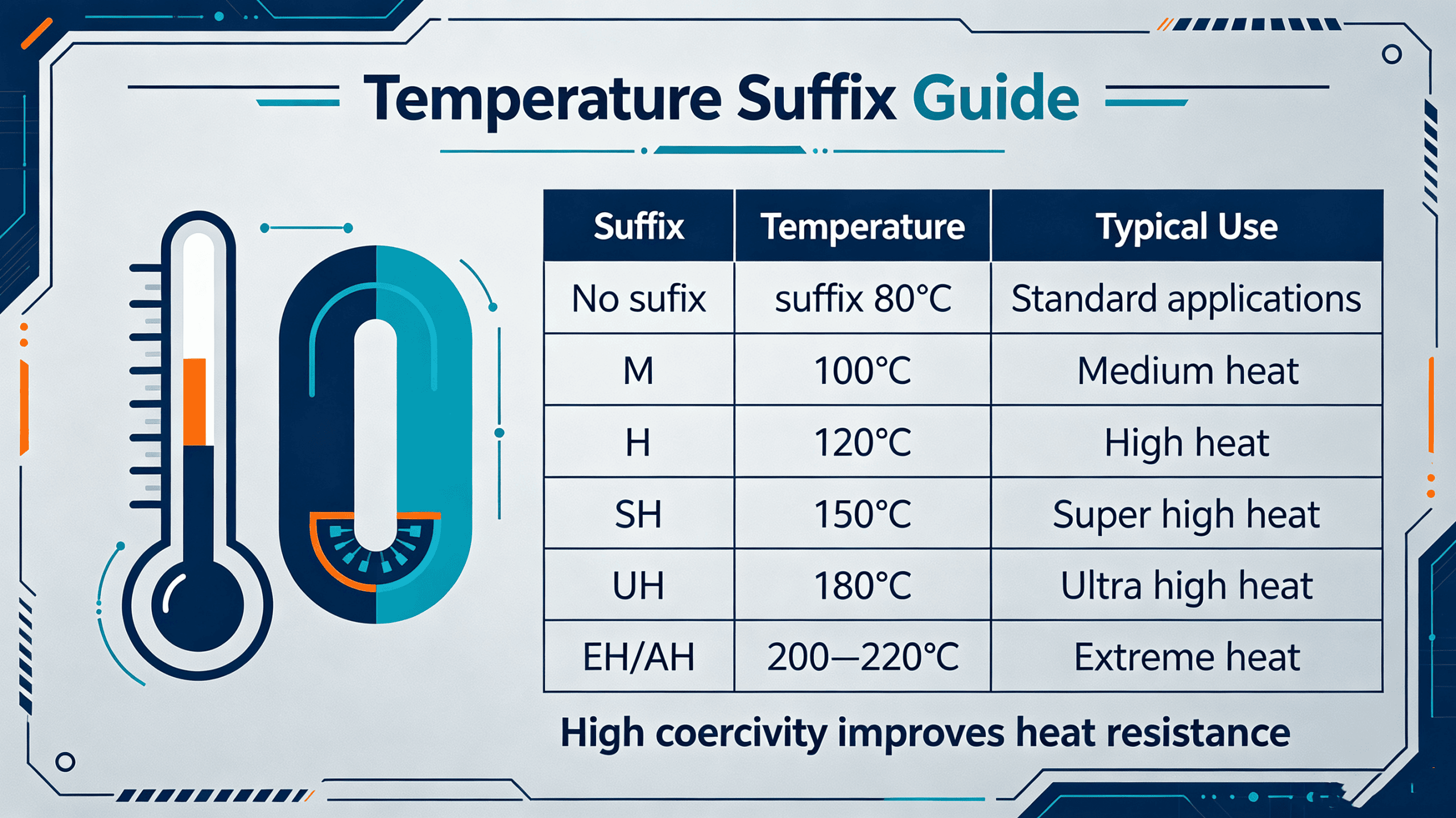
The N-series number only reflects magnetic energy density. Temperature resistance depends entirely on material suffixes and coercivity, not grade numbers.
Standard N52 only withstands ~80°C, while high-coercivity grades like N42SH work steadily up to 150°C. For high-temperature motors and industrial equipment, lower-grade H/SH/UH series outperform standard high-number grades.
Common Temperature Suffix Guide
What Actually Determines Magnet Pull Force?
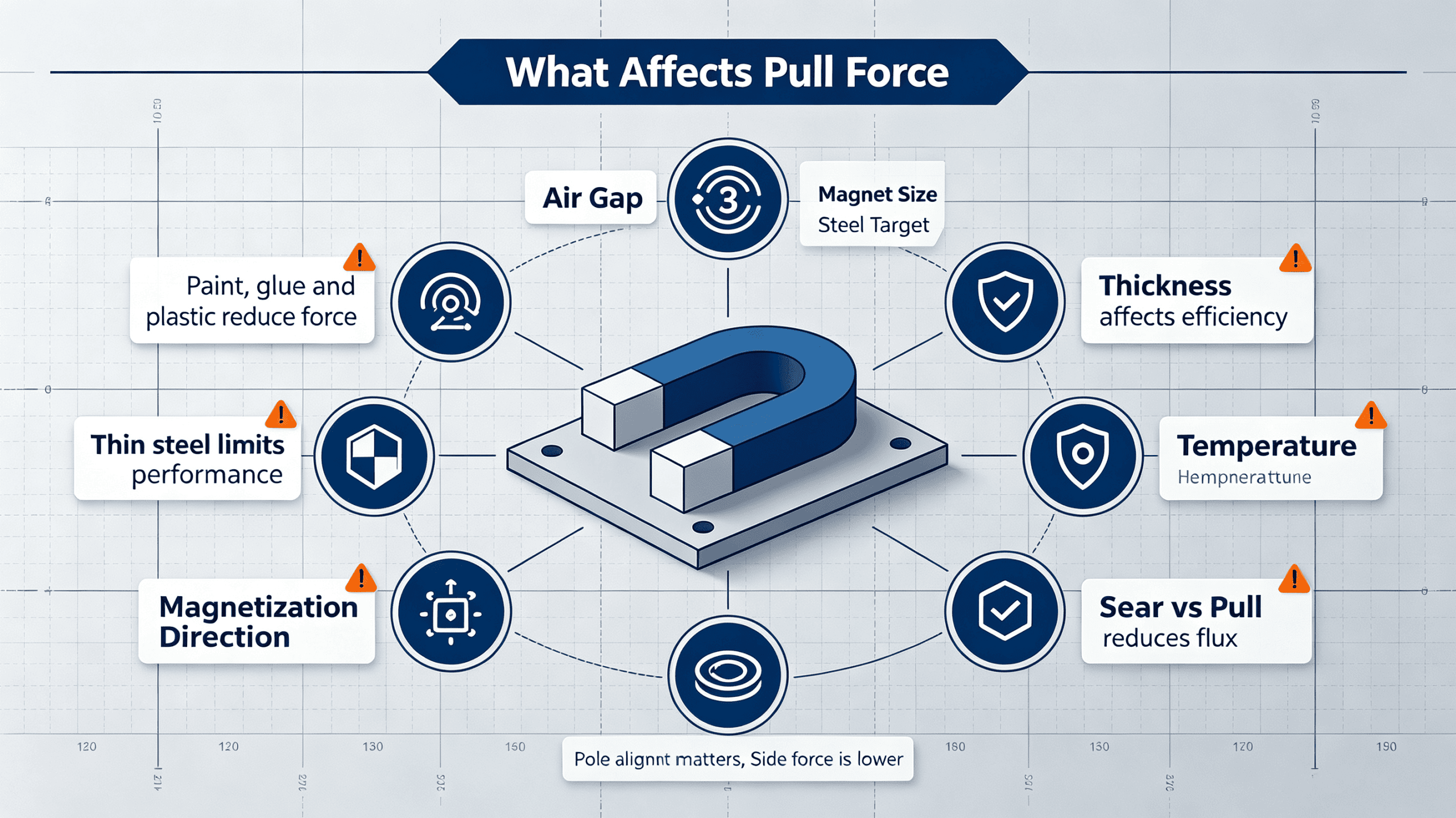
Grade is just one factor. These variables affect final holding force more significantly:
Key Conclusion: Optimizing air gap and steel circuit often improves performance more than upgrading from N35 to N52.
10 Common Magnet Selection Mistakes to Avoid
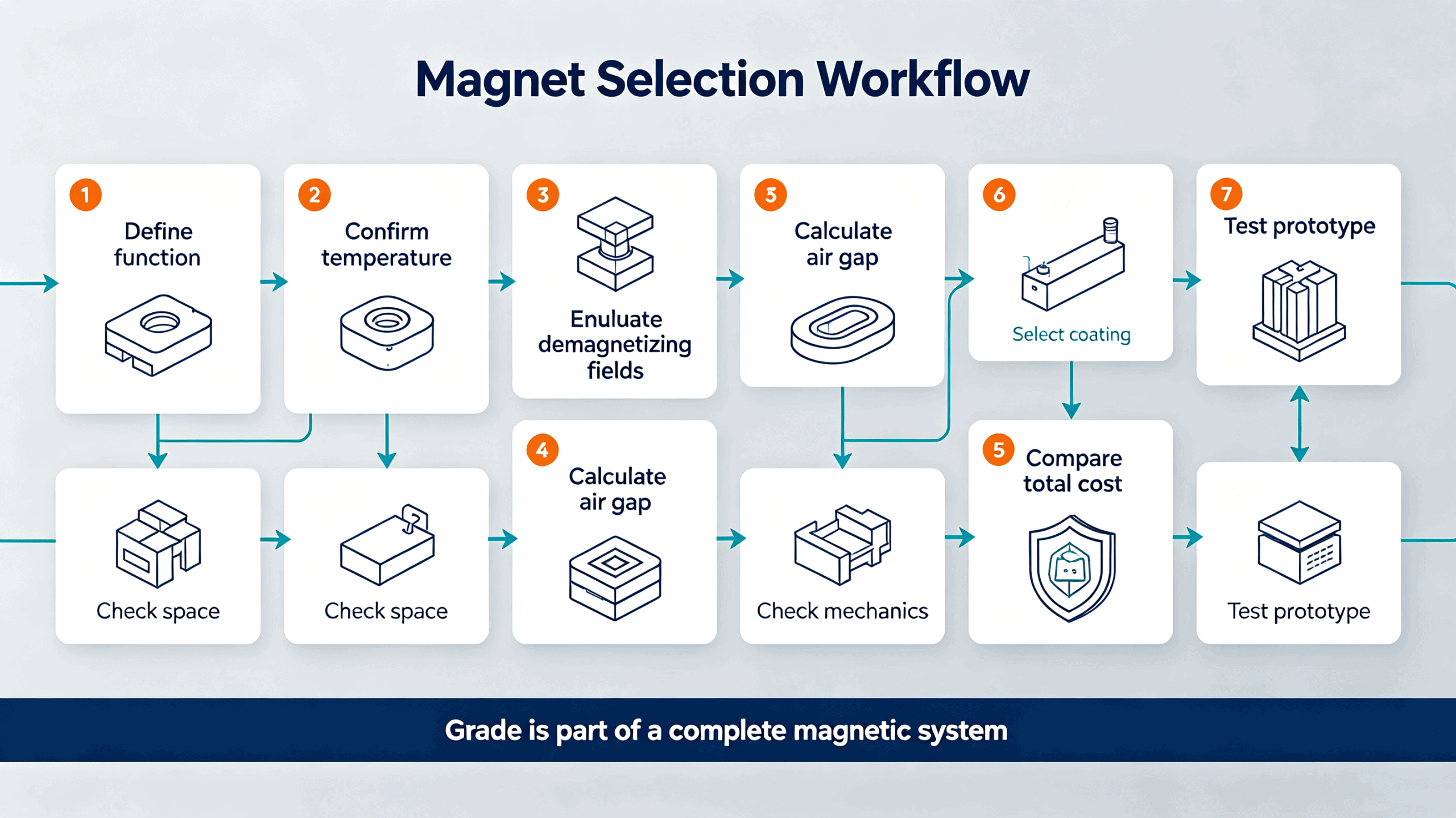
Practical Magnet Selection Workflow (9 Steps)
Follow this process to pick the most cost-effective and reliable grade:
Final Quick Selection Rules
FAQ Quick Answers
Q: Is N52 always stronger than N42/N35?
A: Only with identical size, temperature and air gap. A larger N35 can outperform a small N52.
Q: Does higher grade mean better heat resistance?
A: No. Heat resistance depends on suffix and coercivity, not grade numbers.
Q: Can N35 replace N52?
A: Yes in most spacious scenarios, with lower cost and better stability.
Q: What is the best grade for motors?
A: N35H / N42SH and other high-coercivity grades (prioritize temperature resistance over high N-rating)