No products in the cart.
NdFeB (neodymium-iron-boron) is a key component in various manufacturing products such as motors, speakers, and measuring instruments. Users generally have specific requirements regarding the dimensional tolerances and geometric tolerances of NdFeB, as non-compliant product dimensions may render the NdFeB components unable to be assembled, or even cause damage to the equipment. Failure to meet dimensional standards often results in the risk of batch returns.
The national standards for sintered NdFeB and bonded NdFeB specify the basic requirements for dimensional tolerances and geometric tolerances, which can be used as references during design and material selection.
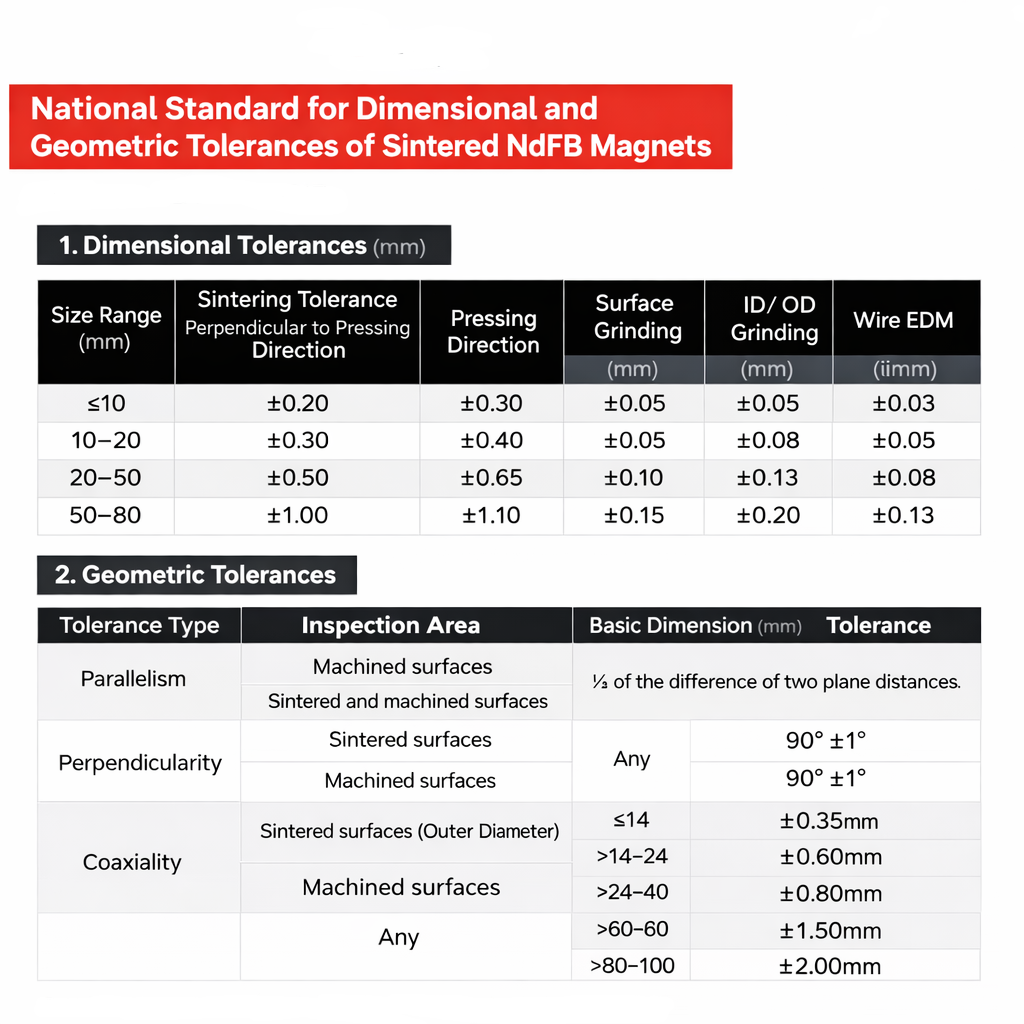
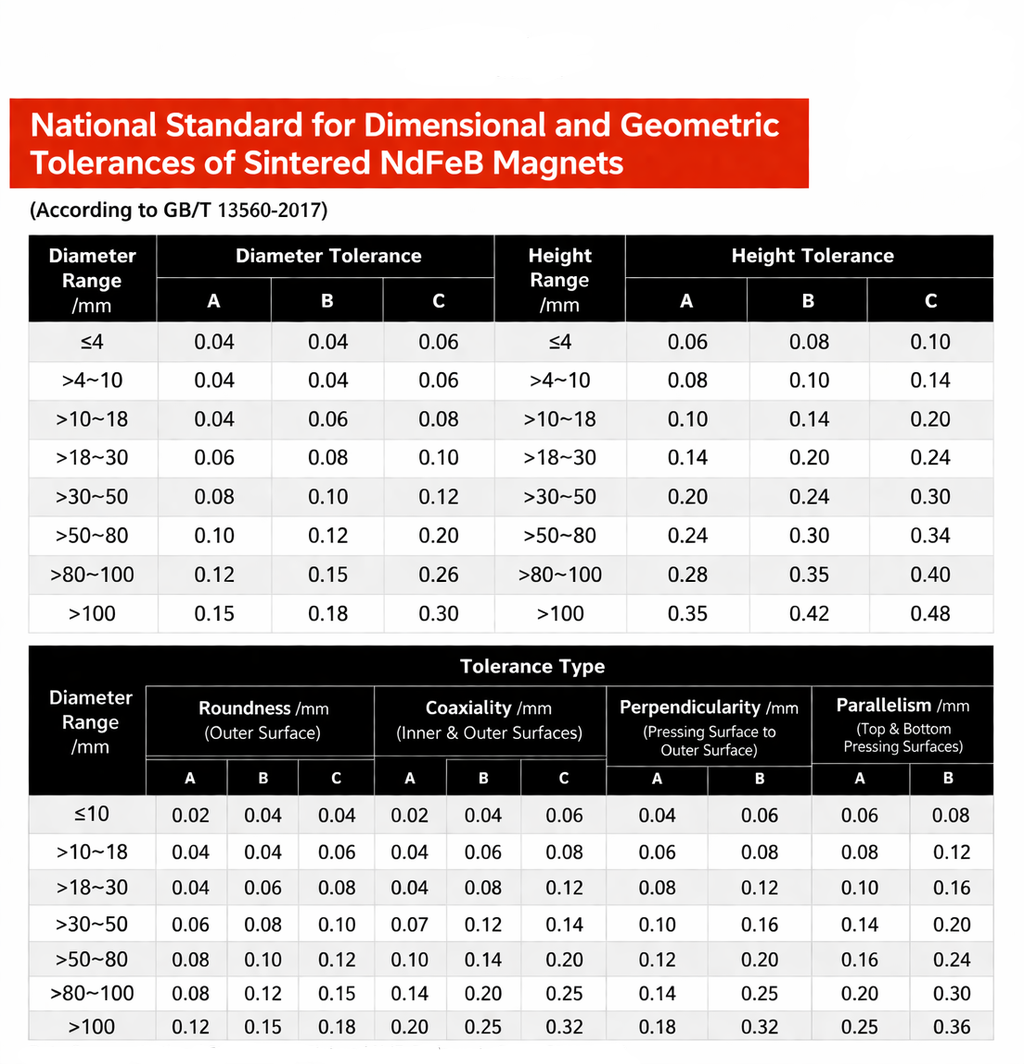
Only when both dimensional tolerances and geometric tolerances are measured as qualified can the assembly of components be considered safe and reliable. Some manufacturers neglect geometric tolerances, resulting in parts that cannot be assembled, leading to frequent customer complaints or returns.
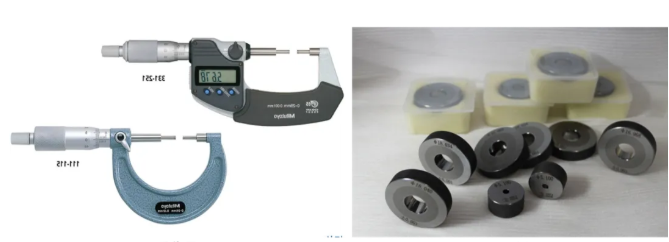
When delivering products, NdFeB manufacturers generally use one of the following two delivery standards:
1. Micrometer
2. Go/no-go gauge
A micrometer can only measure dimensions, not geometric tolerances. A go/no-go gauge can measure both dimensions and geometric tolerances. A common scenario is that parts pass measurement with a micrometer but fail to pass the go/no-go gauge. This occurs because even though the dimensions are qualified, the geometric tolerances are not, making assembly impossible.
China's NdFeB production has been increasing year by year. Its advantages—small size and light weight—have ironically become challenges in the inspection process: large quantities and small dimensions result in heavy manual inspection workloads, slow inspection speeds, and low accuracy.
Currently, the quality inspection workshops of most NdFeB manufacturers rely primarily on manual visual inspection. The disadvantages of manual inspection include high subjective error rates, slow inspection speed, and high labor costs.
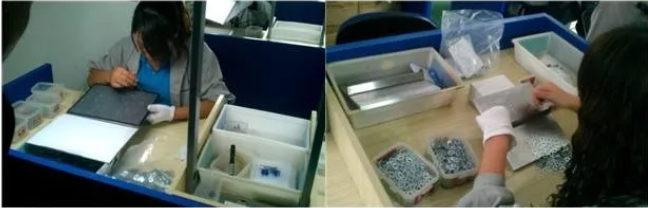
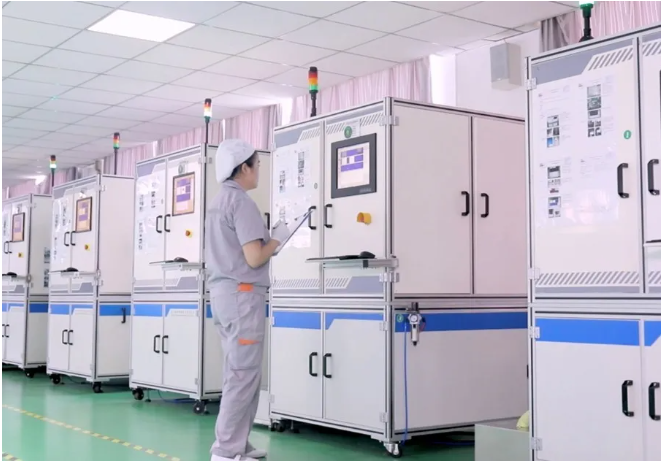
The adoption of automated inspection equipment has become an industry-wide trend in addressing the quality inspection challenges of NdFeB. As production volumes continue to rise, many NdFeB manufacturers are seeking innovation and change, gradually replacing traditional manual inspection with automated inspection equipment.