
No products in the cart.
Everyone knows that sintered NdFeB magnets are prone to oxidation and corrosion, which over time can lead to a decline or even loss of magnetic performance. Therefore, strict anti-corrosion treatment is required before use.
In previous articles, we introduced surface treatment methods and electroplating processes for sintered NdFeB. In addition to electroplating, surface treatments also include electroless plating, electrophoretic coating, and phosphating. Here, we briefly introduce phosphating.
Phosphating treatment for sintered NdFeB magnets mainly serves two purposes:
1.Temporary corrosion protection
2.Improving surface wettability for epoxy bonding
Due to the low density and porous structure of sintered NdFeB, exposed magnets are easily oxidized in air (i.e., corroded). When magnets are stored or in transit for extended periods without a defined final coating, phosphating is an effective and economical interim protection method.
• Simple process, no significant equipment investment required
• Low production cost (mainly acids, alkalis, and phosphating solution)
• Does not significantly increase overall manufacturing cost
• Uniform appearance and clean surface after treatment
• Suitable for vacuum packaging, greatly extending storage time
• Better than traditional oil immersion or oil coating methods
• A complete phosphating layer can resist oxidation in normal atmospheric conditions
Additionally, phosphated parts are easy to process further. The phosphating layer can be completely removed by simple acid pickling, without negatively affecting subsequent treatments such as zinc or nickel plating.
Some NdFeB magnets require epoxy bonding or painting. For good adhesion, the substrate must have excellent wettability.
Phosphating significantly improves the wettability of the magnet surface, ensuring better bonding strength between the magnet and epoxy adhesives or coatings.
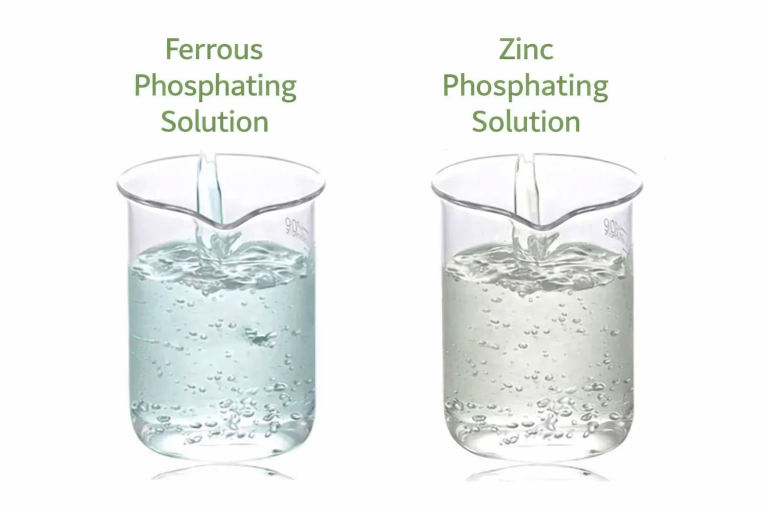
The phosphating process for magnet surfaces typically includes:
Degreasing → Rinsing → Acid Pickling → Rinsing → Surface Conditioning → Phosphating → Sealing & Drying
Degreasing and pickling are similar to pre-treatment steps before electroplating. Surface conditioning is a specific treatment to prepare the NdFeB surface for phosphating. It usually involves weak acid immersion to adjust the alloy composition, promoting the formation of a uniform phosphating layer.
Phosphating is generally carried out using commercial phosphating solutions, including zinc-based, iron-based, manganese-based, binary, and multi-component systems. Each has its own advantages, and manufacturers select based on cost and performance. For products requiring phosphating after zinc plating, zinc-based or zinc-containing solutions should be used.
Based on temperature, phosphating processes are classified into high-temperature, medium-temperature, and room-temperature types:
• High temperature: thicker, denser coating
• Room temperature: thinner coating
• Medium temperature: intermediate performance
Most manufacturers use room-temperature processes, typically controlled within 15–35°C for stability.
In some cases, rust may still occur after phosphating. Common causes include:
• Insufficient phosphating solution concentration, resulting in a thin or porous coating
• Inadequate rinsing or overly acidic rinse water, leaving residues that damage the coating
• Incomplete degreasing, affecting coating formation
To ensure effective phosphating:
• Maintain proper solution composition and concentration
• Control temperature within the specified range
• Keep phosphating time at 10–15 minutes
• Use rack plating or reduce loading density to ensure sufficient spacing between parts for uniform coating
Proper control of these parameters is essential to achieve consistent corrosion protection and coating quality.