No products in the cart.
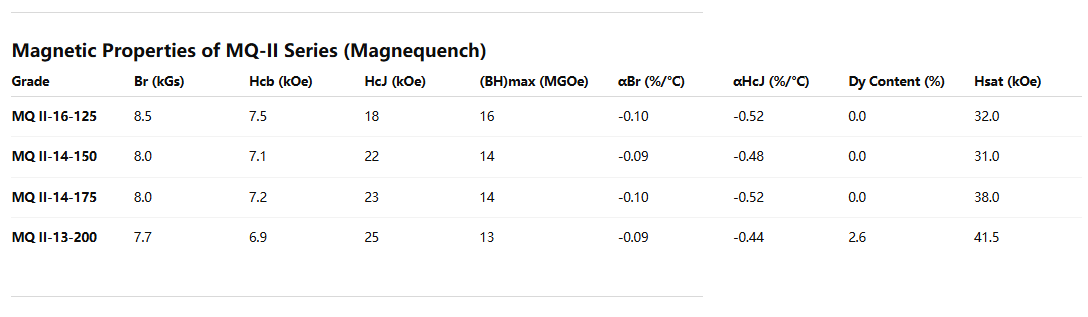
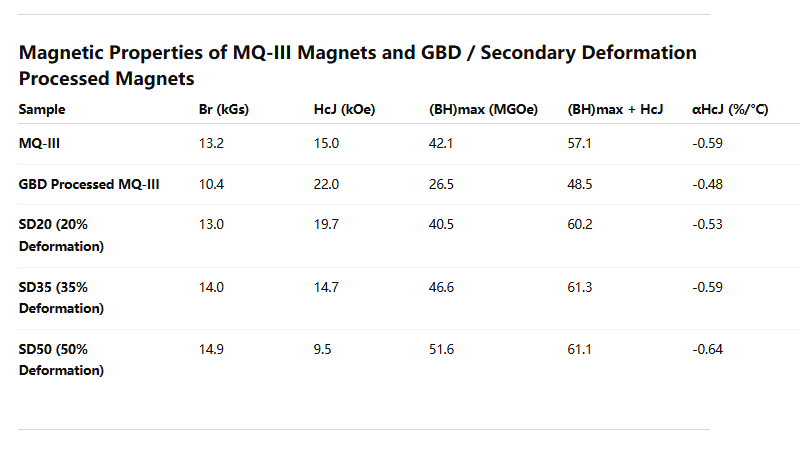
Hot-pressed and hot-deformed NdFeB magnets were researched and successfully developed almost simultaneously with sintered NdFeB magnets. In 1985, the Research Center at General Motors (GM) reported that by utilizing hot-pressing technology to compact rapidly quenched NdFeB powder in an argon atmosphere at 700°C, isotropic magnets with full density could be obtained; these were subsequently designated as MQ-II magnets. Furthermore, if these full-density isotropic magnets were subjected to hot deformation—specifically, by hot-upsetting the MQ-II magnets at temperatures above 700°C to less than 50% of their original height—an orientation degree of over 75% for the easy magnetization axis could be achieved in the direction of upsetting, thereby producing full-density anisotropic hot-deformed magnets; this third type of magnet is referred to as MQ-III.
Since the temperatures involved in hot pressing and hot deformation are relatively low, and the duration of the process is brief, the fine-grained (nano- or sub-micron) structure of the rapidly quenched NdFeB magnetic powder is largely preserved. Consequently, MQ-II and MQ-III magnets retain a very high intrinsic coercivity (*HcJ*); notably, the *HcJ* of MQ-II magnets is only 1 to 2 kOe lower than that of the original powder. For a considerable period thereafter, GM continued to manufacture MQ-II and MQ-III magnets. However, in the early 21st century, GM relocated the production of rapidly quenched NdFeB magnetic powder to Tianjin; shortly after the MQ-II and MQ-III magnet production lines were transferred to Mexico, they were discontinued.
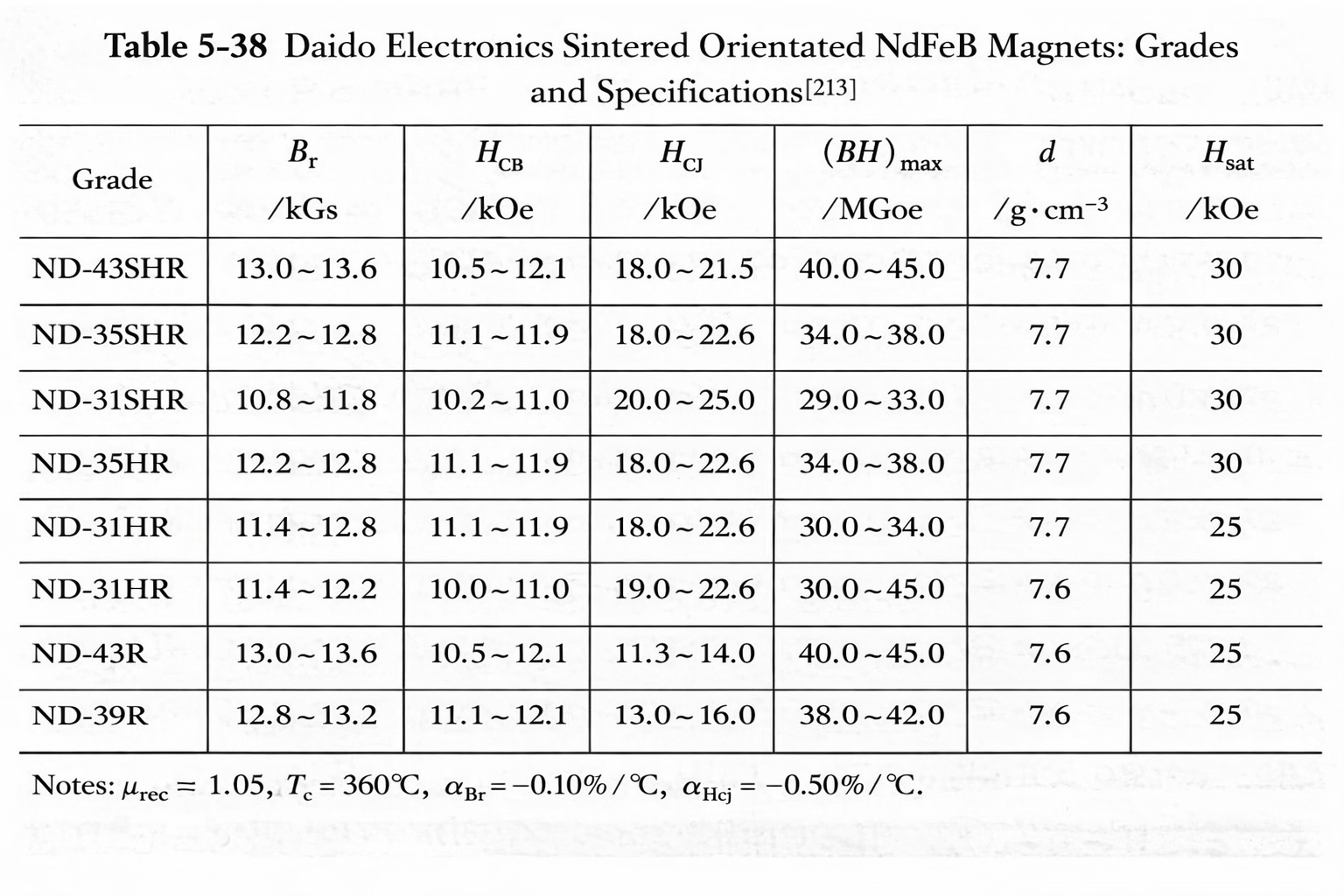
Throughout the research and development phase of hot pressing and hot deformation technologies, Daido Electronics (a subsidiary of Japan's Daido Steel) maintained a close collaborative relationship with Magnequench International (MQI), a subsidiary of GM. This partnership remained intact despite MQI changing ownership several times. In 1991, the two companies launched their own proprietary product lines—NEOQUENCH-H and NEOQUENCH-D—corresponding to the MQ-II and MQ-III series, respectively; these products remain in mass production to this day. In 1992, they commercialized radially oriented magnet rings produced via a hot-pressing and back-extrusion process under the brand name NEOQUENCH-RD. These rings constitute critical components essential for high-precision permanent magnet motors and hold immense potential for future development.