
No products in the cart.
As a third-generation rare earth permanent magnet material, NdFeB has found widespread application due to its exceptional magnetic properties. However, NdFeB magnets suffer from several drawbacks, including a low Curie temperature, a large temperature coefficient of coercivity, and poor chemical stability. Furthermore, the massive consumption of rare earth elements—specifically Pr, Nd, Dy, and Tb—has sparked concerns regarding environmental degradation and the long-term sustainability of rare earth resource supplies. Consequently, while professionals in the magnetic materials industry continue to enhance the performance of NdFeB-based permanent magnets, they are also actively engaged in developing other novel types of permanent magnet materials.
In 1990, Professor Coey of Ireland synthesized the interstitial intermetallic compounds RE2Fe17Nx using gas-solid phase reactions. Through subsequent research, it was discovered that Sm2Fe17Nx compounds possess exceptional intrinsic magnetic properties, thereby heralding the birth of SmFeN rare-earth permanent magnet materials. The theoretical maximum energy product of samarium-iron-nitrogen (SmFeN) permanent magnets reaches 62 MGOe—slightly lower than that of Nd2Fe14B (64 MGOe)—yet their coercivity and Curie temperature are significantly higher than those of neodymium-iron-boron (NdFeB) magnets, allowing for their broader application in high-temperature environments, such as in electric motors.
In addition to its excellent overall magnetic properties, samarium-iron-nitrogen (Sm-Fe-N) exhibits good corrosion and oxidation resistance. Furthermore, unlike samarium-cobalt (Sm-Co) magnets, it contains no strategic metal elements; and unlike neodymium-iron-boron (Nd-Fe-B) magnets, it does not require the consumption of expensive rare earth elements such as praseodymium, neodymium, dysprosium, and terbium (as samarium is relatively abundant and inexpensive). Consequently, it fully meets the criteria to serve as a new type of permanent magnet material. This alluring potential once made Sm-Fe-N the hottest topic in permanent magnet research and development. Since Coey et al. discovered the Sm2Fe17Nx series of rare earth permanent magnet materials, a global surge of research into this family of magnets quickly ensued, with hundreds of laboratories worldwide dedicating themselves to this field at the time. However, a subsequent series of experiments demonstrated that this permanent magnet material faced significant hurdles on the path to industrialization, leading to a situation where research interest waxed and waned over time.
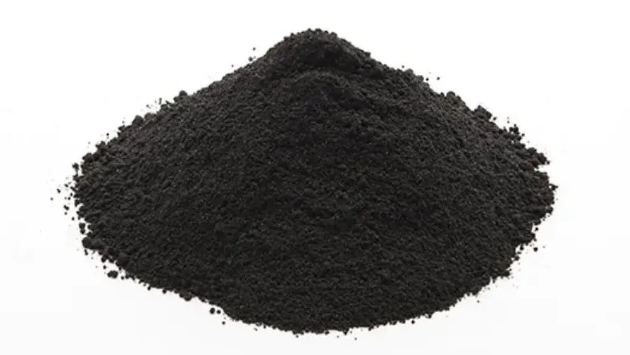
In recent years, driven by the rapid advancements in the automotive industry and the trend toward miniaturization and lightweighting in electronics and electrical appliances, there has been a growing demand for permanent magnets capable of withstanding higher operating temperatures while maintaining superior magnetic properties. As a permanent magnet material that combines excellent thermal stability with outstanding magnetic performance, the Sm2Fe17Nx-based rare-earth permanent magnet series has once again captured significant attention for its potential application value, ushering in a new wave of research and development efforts. The extensive exploitation and utilization of rare-earth elements have led to price surges; specifically, the rising cost of Neodymium (Nd) has driven up production costs for Nd-Fe-B magnets, whereas Samarium (Sm) currently remains in a state of relative oversupply. Consequently, the development of Sm-Fe-N materials offers a strategic advantage by lowering production costs and facilitating the comprehensive utilization of rare-earth resources. Thus, from the perspectives of both magnetic performance and production economics, Sm-Fe-N holds great potential to displace Nd-Fe-B and emerge as the highly anticipated fourth generation of rare-earth permanent magnet materials.
After more than two decades of research and exploration, the challenge of achieving large-scale industrial production of Sm-Fe-N remains unsolved. Studies have revealed that Sm-Fe-N decomposes into SmN and Fe at temperatures exceeding 873 K, thereby losing its permanent magnetic properties; this factor has significantly restricted its application in sintered magnets. Currently, Sm-Fe-N can only be utilized in the fabrication of injection-molded, bonded, and flexible (rubber) magnets. Initially, organic substances—such as nylon and epoxy resins—were employed as binders; however, since these binders are limited to operating temperatures below 200°C, they fail to fully capitalize on the superior high-temperature performance characteristics of Sm2Fe17Nx. Consequently, achieving a breakthrough in processing techniques—specifically through the development of novel binders—is the critical factor determining whether Sm2Fe17Nx magnets can successfully compete with Nd-Fe-B magnets. In recent years, low-melting-point metals have garnered significant attention, with researchers exploring the use of metals such as Zn and Sn as binders. However, utilizing low-melting-point metals—such as Zn—as binders tends to reduce the saturation magnetization, which in turn results in a lower maximum energy product ((BH)max). It is evident, therefore, that identifying an optimal binder is paramount to fully realizing the potential of Sm2Fe17Nx's magnetic properties. Concurrently, the fabrication of densified Sm2Fe17Nx magnets remains a primary objective for researchers, as densified structures are better positioned to fully manifest the material's theoretical magnetic performance.
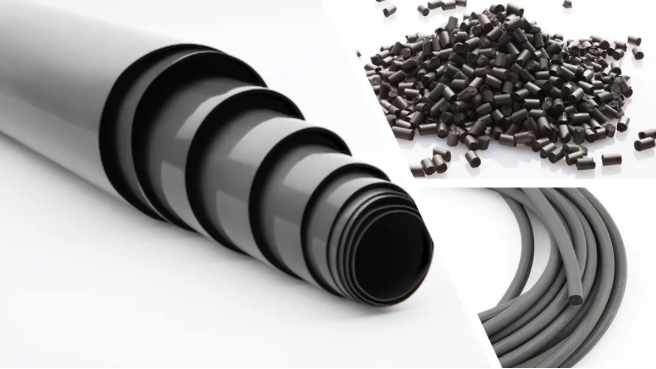
According to statistics from the Japan Bonded Magnet Association, the primary applications for bonded magnets based on samarium-iron-nitrogen (Sm-Fe-N) magnetic materials—owing to their superior magnetic properties, high corrosion resistance, excellent resistance to demagnetization at high temperatures, and high degree of design flexibility—lie in sectors such as information and communication, industrial manufacturing, consumer electronics, and automotive industries. Specific applications include horns and loudspeakers, camera shutter motors, spindle motors, disk clamping mechanisms, magnetic rollers, fan motors, linear motors, automated machinery, high-speed motors, air conditioners, household appliance motors, magnetic sensors, pumps, and auxiliary equipment.
At present, significant progress has been made in the preparation and application of bonded Sm2Fe17Nx magnets; however, achieving full densification remains a key objective toward which many magnet researchers continue to strive. Once a suitable fabrication process is developed, it will become possible to realize the material's theoretical magnetic properties, thereby accelerating the commercialization of samarium-iron-nitrogen magnets.