Custom NdFeB ring magnets made to your required outer diameter, inner diameter, thickness, grade, coating and magnetization direction.
From engineering samples to custom OEM production.
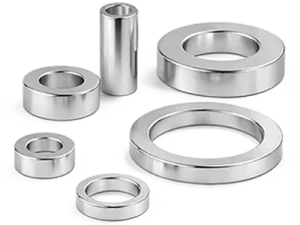
Custom ring magnets are designed around the dimensional, magnetic, thermal and environmental requirements of your application. Whether you need a specific center opening, a defined magnetic field orientation or a particular surface finish, our team can review your drawing, sample or technical requirements to evaluate a suitable solution.
Custom OD and ID based on your drawing and shaft, fastener or assembly requirements.
Axial thickness, radial wall thickness and geometry reviewed for the intended application.
NdFeB grade and magnetic performance evaluated against application requirements.
Axial, diametrical or other feasible magnetization configurations, subject to design review.
Nickel, zinc, epoxy and other finishes evaluated for the operating environment.
Grade selection reviewed against operating temperature and demagnetization risk.
Critical dimensions and fit requirements identified from drawings.
Project requirements reviewed for sample evaluation, inspection and production planning.
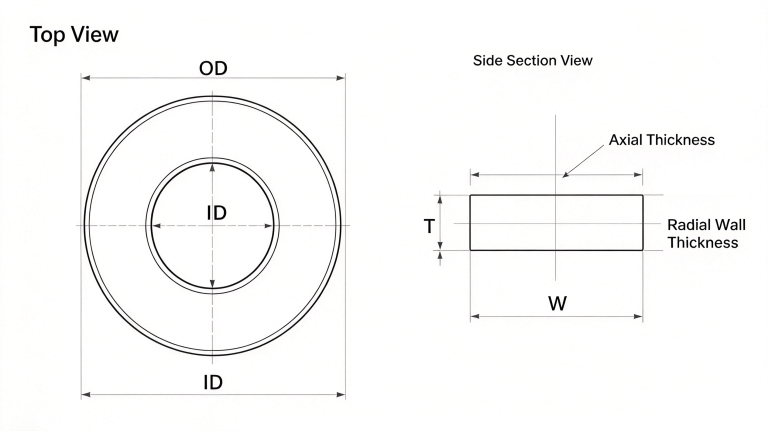
A ring magnet is defined by its outer diameter (OD), inner diameter (ID) and axial thickness. These dimensions determine the available magnetic material volume and affect how the magnet fits around a shaft, fastener or other assembly component.
For custom ring magnets, the radial wall thickness is also an important design consideration. The dimensional relationship between OD, ID and wall thickness should be reviewed alongside the required magnetic performance, mechanical fit and manufacturing tolerances.
When preparing a drawing, identify all critical dimensions and specify the units, tolerances and any additional geometry requirements.
| Design Parameter | Custom Options | Why It Matters |
|---|---|---|
| Outer Diameter (OD) | Specified outside diameter | Controls the external envelope and assembly fit. |
| Inner Diameter (ID) | Specified center opening | Determines clearance for shafts, fasteners or other components. |
| Axial Thickness (T) | Specified magnet thickness | Affects magnetic volume, geometry and assembly space. |
| Radial Wall Thickness | Derived from OD and ID | Influences available magnetic material and structural geometry. |
| Dimensional Tolerance | Defined for critical dimensions | Supports consistent fit and assembly performance. |
| Units | Inch or metric drawings | Clarifies the dimensional reference for manufacturing review. |
Magnetization direction is an important part of ring magnet design. The appropriate configuration depends on how the magnetic field must interact with nearby components, sensors, rotors or other magnets.
Axial and diametrical magnetization use different pole orientations. Radial and multipole configurations may require more specialized manufacturing and magnetization tooling, so feasibility should be confirmed for the specific ring geometry and application.
North and south poles are located on the two flat annular faces.
Pole orientation is distributed across opposite sides of the ring diameter.
Multiple alternating poles may be considered for selected motor, sensing and rotary applications.
Selecting a ring magnet grade involves more than choosing the highest available N-series number. Magnetic requirements, ring geometry, operating temperature and the surrounding magnetic circuit all influence the final performance.
For custom ring magnet projects, the required magnetic properties should be identified according to the application. If you have a target flux density, magnetic field strength or operating condition, include that information with your technical drawing or inquiry.
| Property | Symbol | What It Defines |
|---|---|---|
| Remanence | Br | Residual magnetic flux density after magnetization. |
| Coercive Force | Hcb | Resistance to an externally applied reverse magnetic field. |
| Intrinsic Coercivity | Hcj | Resistance to irreversible demagnetization. |
| Maximum Energy Product | (BH)max | Maximum magnetic energy product of the material. |
| Operating Temperature | — | Temperature suitability based on grade and operating conditions. |
The appropriate grade and magnetic property targets should be confirmed against the actual application, geometry and operating conditions.
Neodymium magnets require a suitable protective finish for their operating environment. Coating selection should consider moisture exposure, corrosion risk, temperature, handling and assembly requirements.
Available options should be confirmed for the specified ring geometry and production requirements.
| Coating | Typical Consideration |
|---|---|
| Ni-Cu-Ni | Common protective finish for general industrial applications. |
| Zinc | Alternative metallic finish for suitable operating environments. |
| Epoxy | May be considered where additional corrosion protection is needed. |
| Other Finishes | Evaluated according to application, environment and availability. |
Custom ring magnets are used in applications where a central opening, defined magnetic field orientation or integration with a rotating or stationary assembly is required. The right design depends on the mechanical arrangement and magnetic requirements of the finished product.
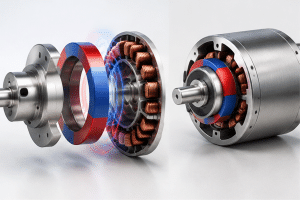
Ring geometry and magnetization can be evaluated against rotor layout and field requirements.
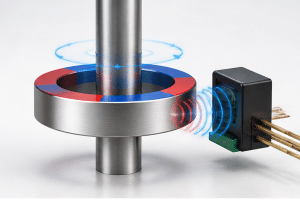
Pole orientation and magnetic field requirements should match the sensor design.
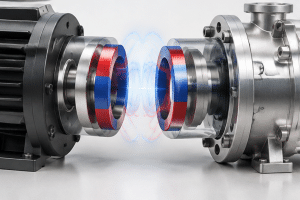
Geometry, spacing and pole configuration are important design considerations.
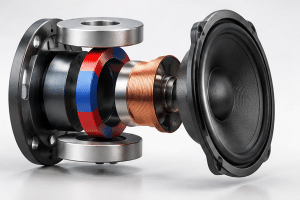
Dimensions and magnetic properties are evaluated against the assembly requirements.
For OEM ring magnet applications, consistent dimensions and magnetic performance are important to assembly fit and product operation. Critical requirements should be defined before production, particularly when the inner diameter, concentricity, thickness or magnetic orientation affects the finished assembly.
Depending on the project requirements and available inspection methods, dimensional checks, magnetic performance verification and coating inspection can be included in the quality review.
To help us review your custom ring magnet project, please provide as much of the following information as possible. If you do not have a complete drawing or are unsure which grade or magnetization direction to select, share your application requirements for an initial review.
| Information | What to Provide |
|---|---|
| Drawing or Sample | Technical drawing, reference sample or preliminary sketch. |
| Dimensions | Outer diameter, inner diameter, thickness and critical tolerances. |
| Magnet Grade | Preferred NdFeB grade, if known. |
| Magnetic Requirements | Target magnetic properties, field requirements or magnetization direction. |
| Operating Conditions | Temperature, moisture exposure and other relevant environmental conditions. |
| Coating | Preferred coating or required corrosion protection. |
| Quantity | Prototype quantity, expected order volume and production forecast. |
| Application | How the magnet will be mounted and used in the finished product. |
Send us your drawing, dimensions or application requirements. Our team can review your project and discuss suitable ring magnet options.
What dimensions can be customized for neodymium ring magnets?
Custom ring magnet projects can be reviewed for outer diameter, inner diameter, axial thickness and dimensional tolerances. Feasibility depends on the required geometry, material and manufacturing process.
Can ring magnets be manufactured with different magnetization directions?
Axial and diametrical magnetization are common configurations. Radial and multipole magnetization may also be considered for suitable designs, subject to engineering and manufacturing review.
Which neodymium magnet grade should I choose?
The appropriate grade depends on magnetic performance, ring dimensions, operating temperature and resistance to demagnetization. The highest grade is not necessarily the best choice for every application.
What coatings are available for custom ring magnets?
Potential finishes include nickel, zinc and epoxy, among other options. Availability and suitability should be confirmed according to the application environment and project requirements.
Can I request custom ring magnets for OEM production?
Yes, you can submit your drawing, sample, required quantity and application details for review. Prototype and production requirements should be evaluated for the specific project.
What information is needed for a custom ring magnet quote?
Provide the outer diameter, inner diameter, thickness, required grade if known, magnetization direction, coating, operating conditions, quantity and application details. A drawing or sample is helpful when available.